Grayscale upends the crypto hierarchy: XRP, ADA, and BNB fall out of its Top 20 in favor of Morpho and Avalanche. Details here!
As the crypto market oscillates between regulatory uncertainty and technical expectations, XRP captures the attention of the most strategic investors. For over four months, Ripple's flagship asset has remained stuck between $2.00 and $2.60, in a consolidation that intrigues. This stability, unusual for such an exposed crypto, fuels speculation about a possible breakout.
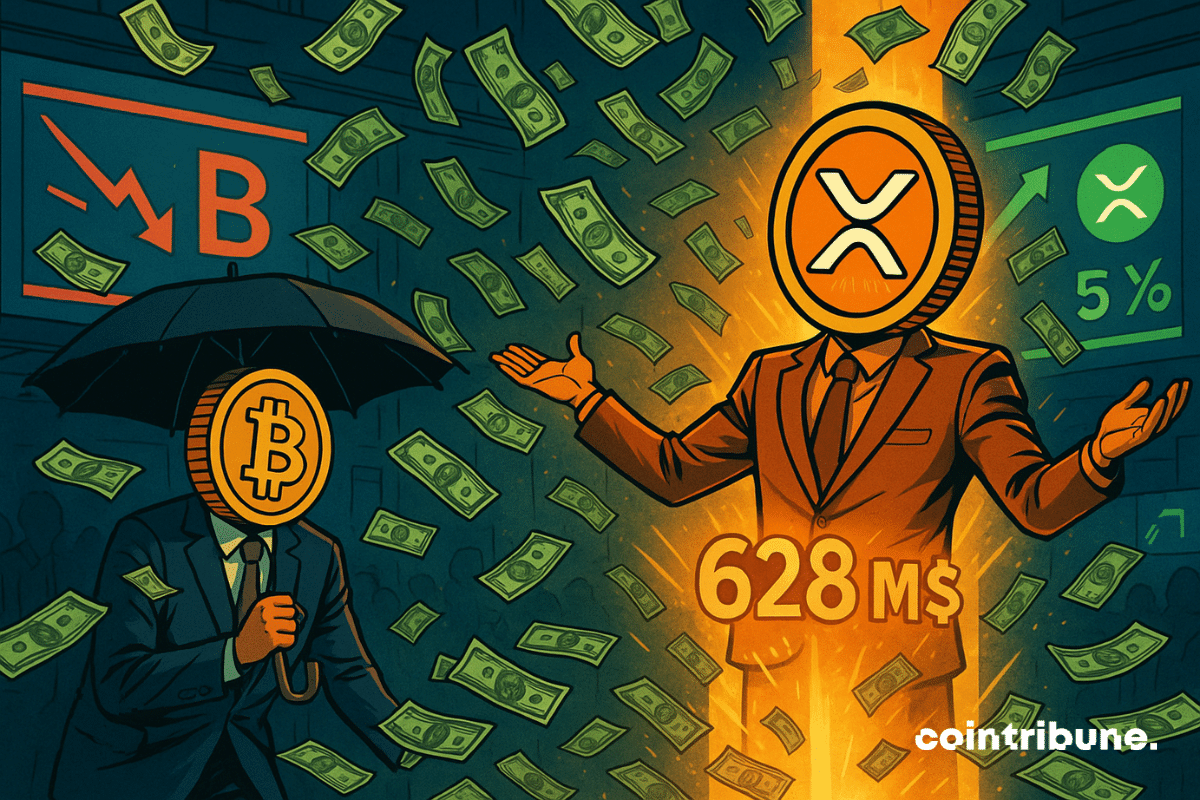
While the market focuses on price curves, a key indicator of real activity has collapsed. Payment volume on the XRP Ledger has dropped by nearly 70% in just a few days. Behind this discreet withdrawal lies a deeper questioning of the network's vitality, its concrete adoption, and the robustness of its operational model.
A simple emoji posted by Arthur Britto, co-founder of Ripple, was enough to reignite speculation about the future of XRP. Having disappeared from the radar for nearly fourteen years, the elusive engineer has broken his silence on X without a word. In an industry where every signal matters, this unexpected reappearance of a key player in Ripple's history raises many questions about his intentions and the role he might play in the ecosystem.
While XRP is experiencing a notable surge, on-chain data paints a much less euphoric picture. In the background, record volumes of profit-taking by long-term holders are multiplying, injecting a silent but significant selling pressure. This disconnect between visible euphoria and structural signals raises doubts about the rally's strength. Several technical indicators suggest an increased risk of a reversal in a market where the balance seems increasingly precarious.
Early XRP investors are sitting on gains of over 300%, but rising selling pressure is testing the token’s strength.
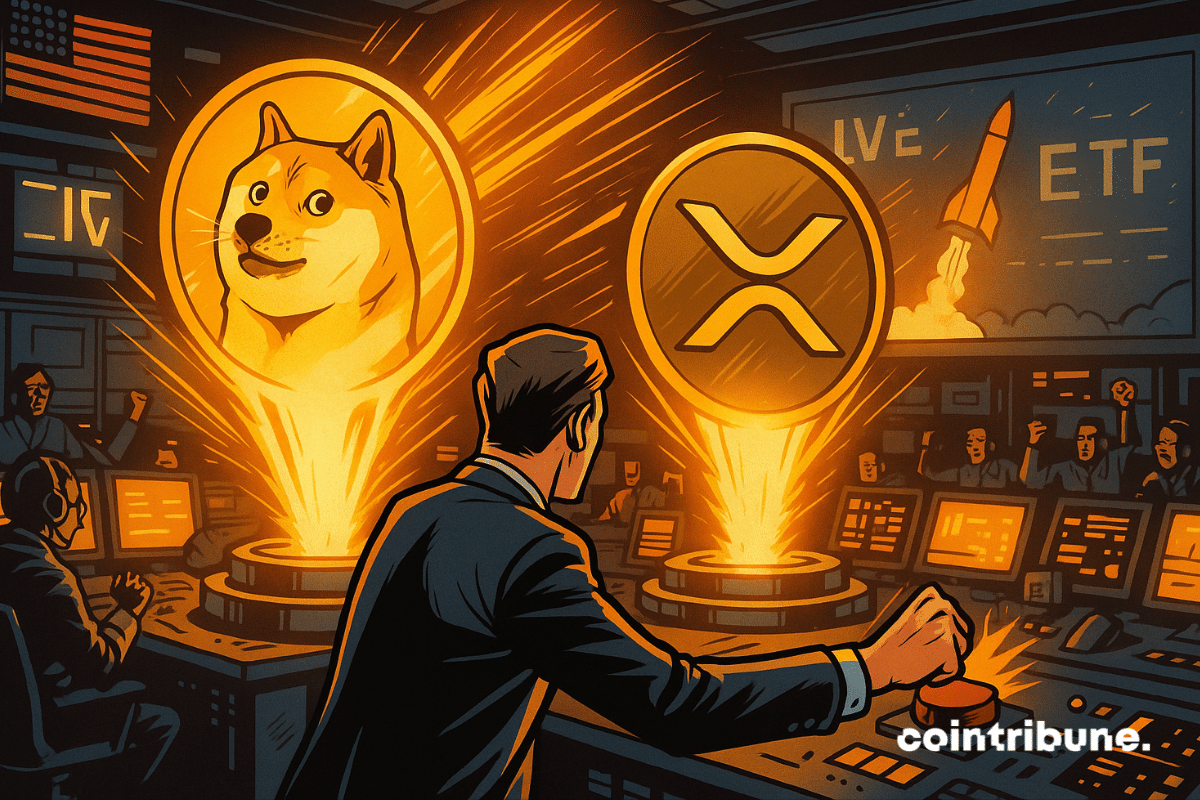
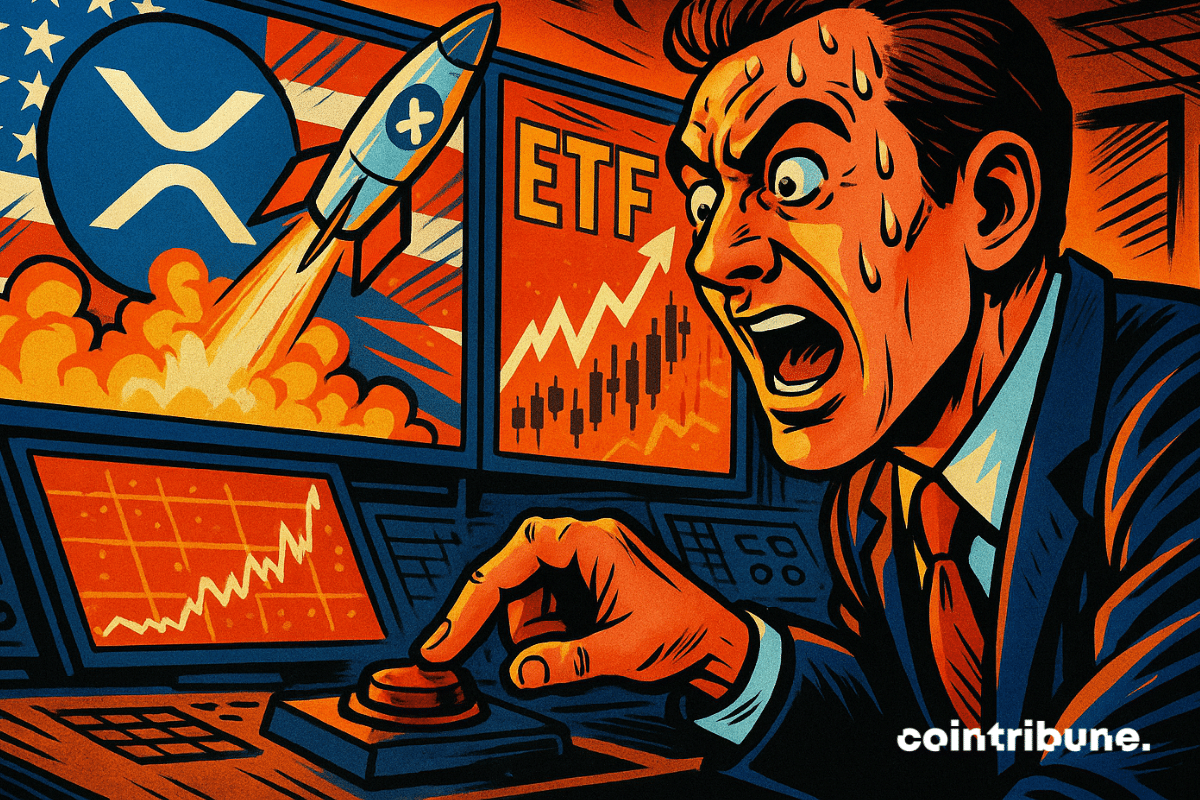
The regulatory lock on cryptocurrencies in the United States could soon be lifted. According to Bloomberg, the spot ETFs for XRP, Dogecoin, and Cardano now have a 90% chance of being approved by the end of this year. This is a first, as only Bitcoin and Ethereum had previously received the SEC's approval. Behind this shift is a clear signal: the American regulator is changing its tone. And altcoins, long kept at bay, are set to join the arena of traditional financial products.
For five years, the Ripple vs SEC case has crystallized tensions between crypto innovation and American regulation. On June 17, Ripple filed a strategic motion with Judge Analisa Torres, aiming to close the case without further judicial confrontation. If accepted, this initiative could accelerate the resolution of the dispute, but also redefine the relationship between blockchain companies and financial authorities in the United States. A legal precedent may be on the verge of being established.
In a crypto market still marked by uncertainty, a subtle signal announces a trend reversal. XRP, long in the background, shows a sudden acceleration in its on-chain activity, with a 50% surge in payments in 24 hours. As the crypto stabilizes on a key technical support, some analysts mention the beginnings of a bullish reversal. Away from the limelight, Ripple seems to be awakening market attention.
While attention is focused on upcoming regulations and emerging ETFs, a lesser-known technical indicator is reshuffling the deck. XRP is seeing a fourfold increase in its realized market capitalization compared to that of Solana. This capital shift suggests a deeper and unexpected market dynamic, counter to the visible enthusiasm for Solana. Behind this metric, a change in investor perception seems to be emerging, giving XRP a central role once again in the altcoin arena.
While the bombs are falling, Solana climbs, XRP gets excited, and ETFs stir the crypto pot. Should we see geniuses or arsonists behind these digital surges?
In just a few hours, cryptocurrencies have faltered under the weight of a major geopolitical event. Following Israeli strikes in Iran, over one billion dollars in positions were liquidated, taking with them the market's recent gains. This is not just a simple episode of volatility, but a tangible sign that these assets, which stem from a promise of sovereignty, remain exposed to real-world shocks.
Violent return to reality for XRP traders. Within 24 hours, a historic imbalance in liquidations triggered instability in the derivatives market, trapping traders. As the crypto plunged below $2.30, the leverage turned against those betting on a continued bullish trend. This technical setback, seemingly innocuous, raises questions about the strength of the narrative surrounding XRP.
When a Wall Street institution migrates to a public blockchain, it is no longer an experiment, it is a shift. By issuing its debt securities on the XRP Ledger, Guggenheim Treasury Services not only validates Ripple's infrastructure, but also redefines the boundaries of market finance. This operation marks a concrete advancement in the tokenization of real-world assets and confirms the gradual embedding of decentralized finance at the heart of institutional strategies.
The crypto market remains suspended on technical signals that experienced investors scrutinize closely. On XRP, the alert has been raised: a death cross, a bearish crossover of moving averages, has just been detected. Rare and feared, this signal often heralds prolonged pullback phases. In a climate of indecision where the asset struggles to regain a direction, this indicator could modify investors' perceptions and influence their short-term positions. This configuration could weigh heavily on the trajectory of XRP.
While the markets scrutinize the upcoming regulatory decisions, XRP experiences an unexpected surge. Now the fourth largest asset in the sector, it has seen a notable rebound after two sessions of decline, briefly instilling a renewed sense of optimism. However, behind this technical signal lies a more contrasted reality: trading volume has collapsed by nearly 49% in 24 hours. In a tense climate where every movement fuels speculation, XRP is once again becoming a barometer of the contradictions in the crypto market.
Solana is shaking, XRP is plummeting, Ethereum is swaying... the whales dance and small investors suffer. The crypto circus continues, without a net, to the rhythm of an increasingly unpredictable market.
XRP and Dogecoin are making their way into DeFi... but not as you might imagine! Discover how Coinbase is transforming these crypto dinosaurs into ultra-connected tokens on Base. Opportunity or marketing stunt? The bet is on, and it leaves no one indifferent.
The cryptocurrency market, always subject to extreme volatility, took a strong hit again this week. XRP, one of the most watched cryptocurrencies, experienced a brutal drop in its price, triggering an unprecedented wave of long position liquidations. This sudden reversal caught traders off guard, but it also spread panic throughout the entire market, highlighting the inherent risks of using leverage in such a volatile environment.
XRP sees rising trader interest and key price tests, hinting at a possible breakout or continued sideways movement.
While Bitcoin is napping above 100,000 dollars, Ethereum is filling the coffers. Funds are pouring in, ETFs are buzzing: who said that crypto is running out of steam?
XRP is fueled by risky bets: billions on the table, a coin frozen. A bubble? A takeoff? Derivatives are heating up, but the crypto is still waiting for its green light.
As the crypto market fluctuates between hopes of recovery and signals of caution, a discreet indicator draws attention: the evolution of staking on XRP. Despite recent upward movements, on-chain data reveals a clear decline in engagement on the XRP Ledger network. This disinterest, which contrasts with the apparent momentum of the crypto, could reflect a general loss of confidence among investors in the project's short-term viability.
In a crypto ecosystem where every move is scrutinized by investors, the sudden rise of XRP on the regulatory scene is intriguing. In just a few days, the likelihood of approval for a spot ETF backed by this asset has jumped to 83%, according to Polymarket. This figure, far from trivial, crystallizes a strategic turning point in the battle between the crypto industry and the SEC. More than just a speculative signal, it embodies a possible shift towards long-awaited institutional legitimization.
XRP is faltering against Bitcoin. A feared technical crossover, the "death cross", has just appeared on the XRP/BTC pair, rekindling investor concerns. This signal, associated with a marked bearish trend, contrasts with the strength displayed by Bitcoin. However, against the backdrop of this grim picture, some technical indicators on longer time frames suggest a possible reversal. Amid short-term tensions and hopes of a rebound, XRP is once again capturing the attention of a crypto market searching for benchmarks.
While Bitcoin breaches a new peak of over $111,000, XRP is navigating a climate of uncertainty. Driven by the accumulation of tokens by large holders, Ripple's cryptocurrency is experiencing a bullish momentum. However, this dynamic is accompanied by tensions: the rapid increase in reserves on Binance and other exchanges fuels doubts. In an ultra-reactive market, where every indicator matters, this unstable configuration calls for a nuanced reading of the dynamics at play.
Bitcoin recently climbed above $111,000, marking a fresh all-time high and stirring new interest across the crypto space. After a small pullback, the focus is turning to altcoins, with several showing early signs of movement. Solana rose 4%, XRP lifted 1%, and Cardano saw a 2% gain. These numbers have led some to believe that the next stage of the market cycle could be near.
XRP draws attention with 73% long positions. Discover why this crypto asset could soon soar.
The SEC is slowing the momentum of crypto ETFs and postponing decisions on the XRP ETF, Ethereum ETF staking, and Dogecoin ETF until the summer of 2025. These delays illustrate the regulatory complexity surrounding the integration of cryptocurrencies into traditional finance, hindering their adoption by institutional investors. However, an unexpected candidate may well be approved much sooner than anticipated.
Some launches redefine the position of an asset in the crypto ecosystem. On May 22, 2025, Volatility Shares will introduce the first futures ETF on XRP to the market, marking a turning point for the integration of this asset into institutional finance. As the market seeks regulated products for accessing cryptocurrencies, this new financial vehicle reflects the growing interest in XRP and could accelerate its adoption in the portfolios of traditional investors.