Trump's new taxes destabilize the markets. What are the consequences for the American economy? The full analysis here!
The Trump administration has just triggered a real commercial earthquake. Through the imposition of a universal customs tax of 10%, soon raised to 34% for certain countries, Washington is reviving an aggressive protectionist strategy. This decision, counter to multilateral rules, threatens to reconfigure global trade and is already prompting reactions from more than 50 states. In a tense international context, this major shift could well mark the beginning of a new era of economic confrontation.
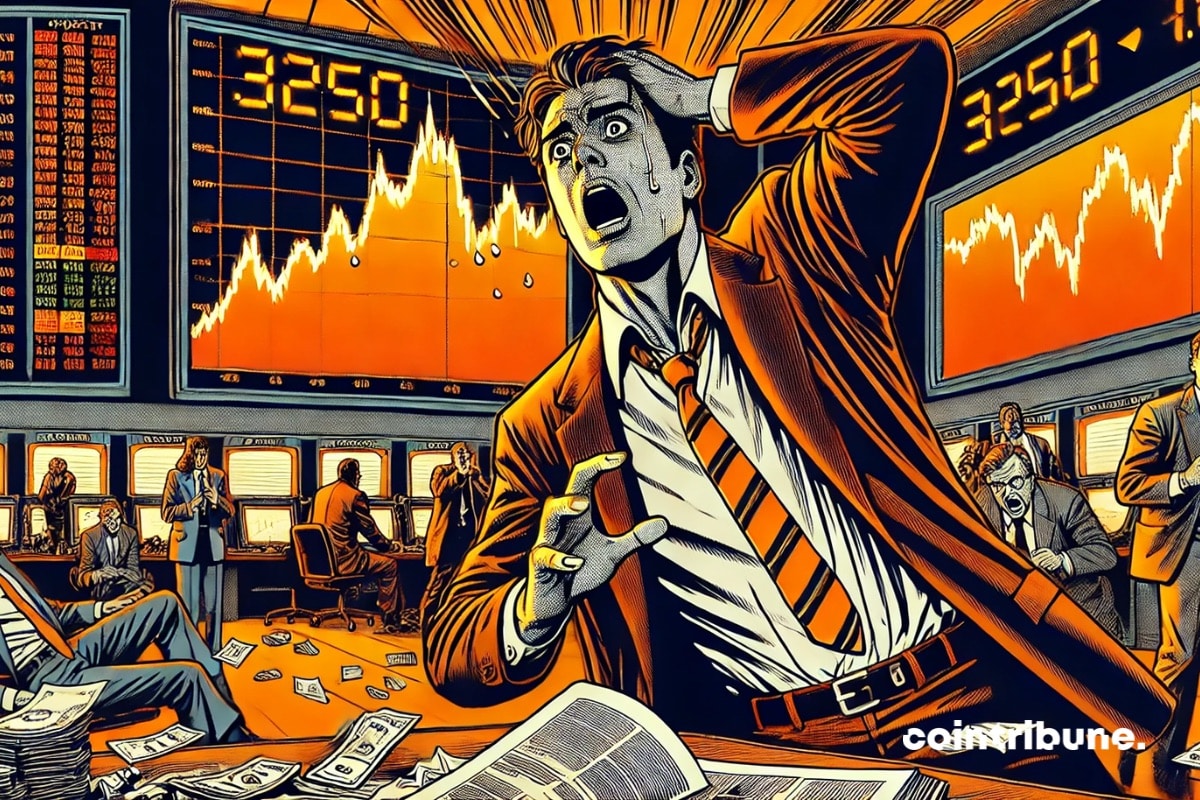
A historic day on Wall Street: on April 4, 2025, American markets lost $3.25 trillion, more than the total market capitalization of crypto. This brutal drop, triggered by tariff measures from Trump, reveals a deep crisis. Bitcoin, however, endures. An analysis of an economic shift.
JPMorgan has revised its economic forecasts for 2025, raising the probability of a global recession to 60% due to the new tariffs imposed by the Trump administration. According to a report released this Thursday, titled "There will be Blood," the investment bank warns that the tariffs, which will take effect next week, risk plunging not only the United States but the entire global economy into a recession.
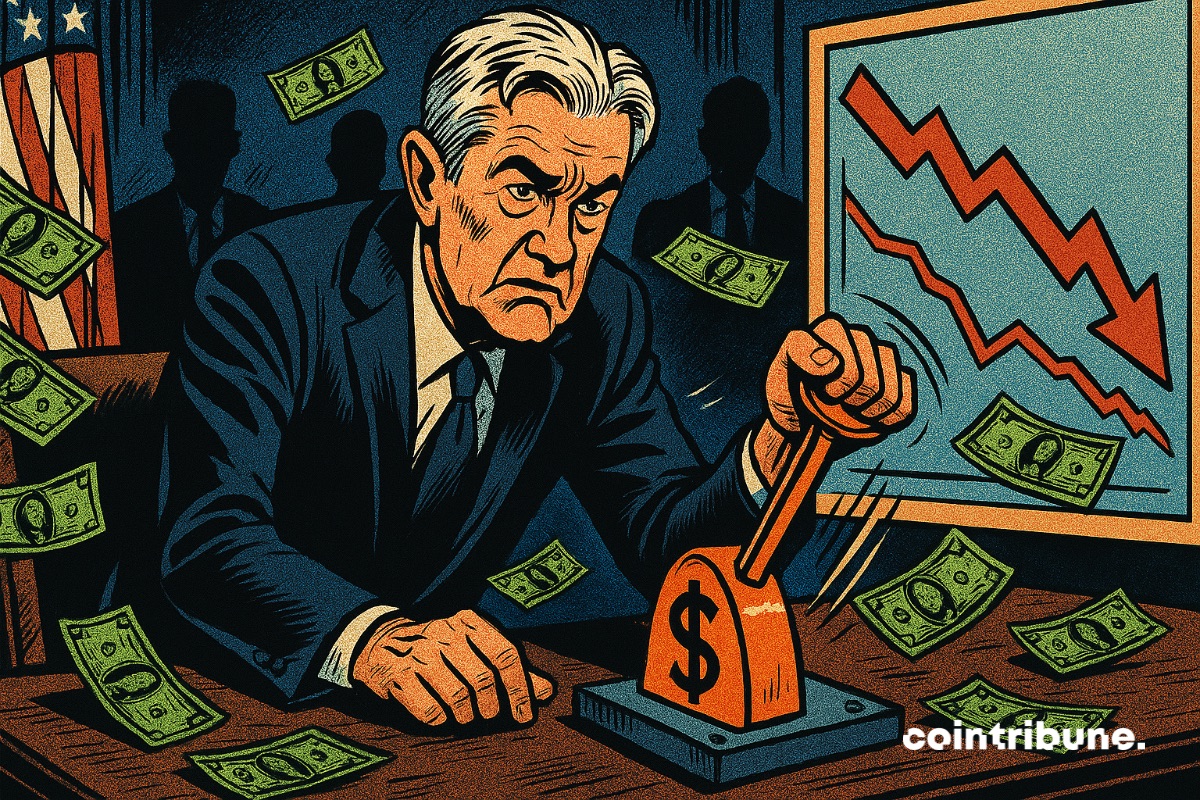
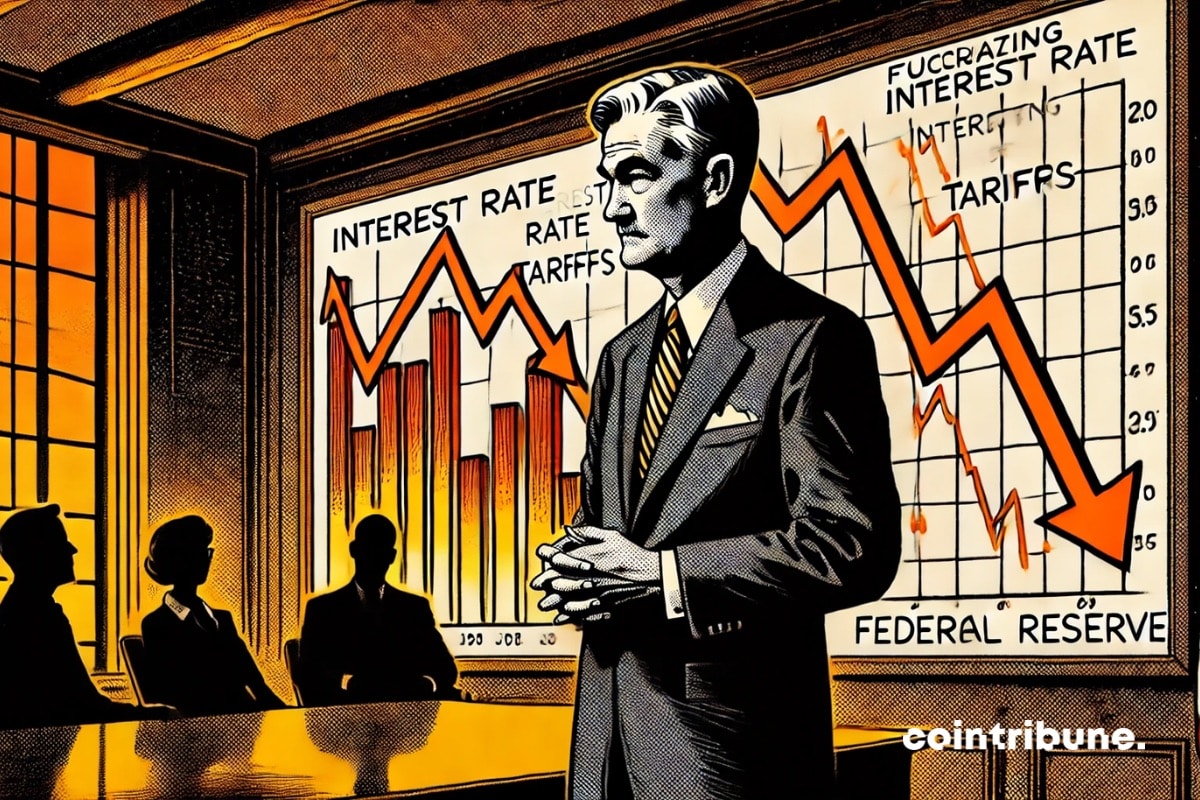
Donald Trump recently triggered an economic shockwave by announcing new tariffs. In response, Jerome Powell, the Chair of the Federal Reserve (FED), warned that these measures could exacerbate inflation while slowing down growth. What will be the impact on interest rates? Find out here.
Donald Trump is once again making his mark at the helm of the United States. By launching a vast tariff offensive against almost all of the country's trading partners, the president is triggering an economic and diplomatic earthquake. Wall Street is falling, allies are worried, and Beijing is retaliating. This decision, as much strategic as ideological, marks the overt return of hard protectionism and places American economic sovereignty at the center of the global game.
Donald Trump has caused an economic shockwave by announcing significant tariffs targeting almost all countries in the world. The figures presented by the White House are being thoroughly analyzed by experts and raise questions among the United States' trading partners.
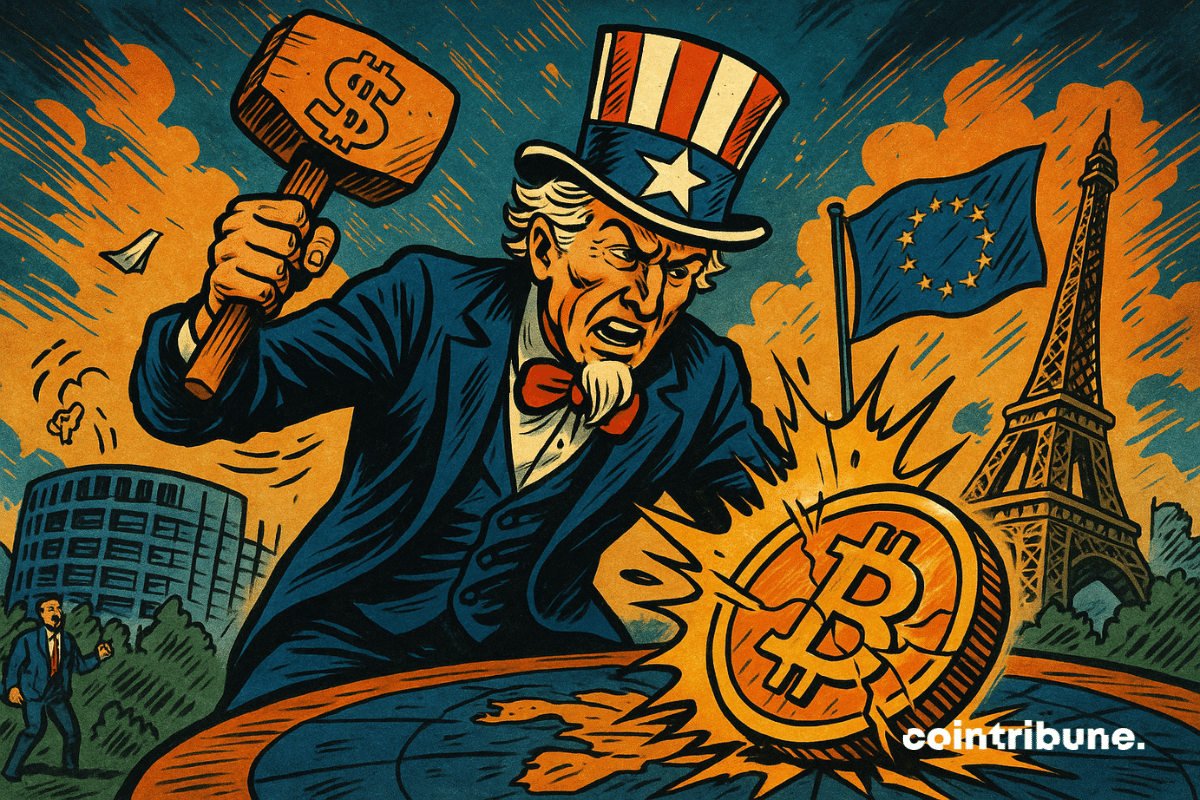
Donald Trump triggered a new trade earthquake on the night of April 2 to 3, 2025. By announcing an increase in tariffs of up to 20% on products from the European Union, the current head of the White House is reviving transatlantic tensions. But France and Europe are not going to take it lying down and are going on the offensive!
On April 2, 2025, Donald Trump spoke from the Rose Garden of the White House to announce a series of unprecedented protectionist measures, as part of what he now calls "Economic Liberation Day." True to his America First creed, the American president outlined a decree imposing massive tariffs aimed at reindustrializing the country and reducing its dependence on foreign imports. Unfortunately, the markets were not prepared for what would follow...
In 2025, declaring your cryptocurrencies has never been so strategic. With the entry into force of the European MiCA regulation and the tightening of tax controls, holders of Bitcoin, Ethereum, or other digital assets must be extra vigilant. Mistakes can be costly: penalties, adjustments, or even suspicions of fraud. Here is a powerful guide to navigate the key dates and nuances of the French tax regime, without getting lost in administrative maze.
In light of the deadlock in the conflict in Ukraine, Donald Trump is changing his tone and threatening Moscow with an economic sledgehammer. The American president, who has so far been measured towards the Kremlin, is now brandishing the card of tariff sanctions on Russian oil. The stated objective is indeed to force Vladimir Putin to move towards a ceasefire. A shocking statement that fractures diplomatic balances and elicits reactions even in European capitals, at a time when the slightest tension can redefine the global geopolitical chessboard.
The American economy is entering a turbulent zone. Trump is taxing cars, the markets are derailing. All the details in this article!
Tensions between Washington and Brussels are taking a disturbing turn. While transatlantic trade represents a colossal market of $9.5 trillion, the new tariffs imposed by Donald Trump risk upsetting an already fragile balance. A trade war between the two economic powers could lead to increased production costs, a drastic drop in trade, and growing instability for businesses.
Trade wars are reshaping the global economy. They impact entire industries and reconfigure strategic balances. Among the companies directly affected, Tesla finds itself on the front line facing the new tariff measures imposed by Donald Trump. Tesla, for which China is the second-largest market after the United States, could pay a heavy price for this economic escalation.
In the trade tug-of-war between the United States and the European Union, a new episode has rekindled tensions. Indeed, Donald Trump, true to his protectionist approach, is once again wielding the threat of massive tariffs, this time on European wines and champagnes. The announcement of a 200% tax on these products follows Brussels' decision to increase tariffs on American whiskey to 50%.
The tax regimes for cryptocurrencies in France and Switzerland present significant differences. While Switzerland is known for its favorable tax conditions for private investors, France imposes a stricter taxation with a flat tax of 30% on capital gains realized. Here is a detailed comparison of the tax obligations in these two countries.
The American economy is going through a turbulent phase. Between rising inflation and a marked slowdown in growth, a long-forgotten specter resurfaces: stagflation. This phenomenon, which combines economic stagnation and rising prices, evokes the crises of the 1970s. Today, Donald Trump's new tariff policies rekindle fears of a return to that time when growth was stalled and purchasing power was eroding rapidly. The American president's decision to impose heavy taxes on Chinese, Mexican, and Canadian imports raises many questions about their real effects on the economy. As the Federal Reserve is pushed to its limits, markets are wavering, and businesses are concerned about the repercussions on their profitability.
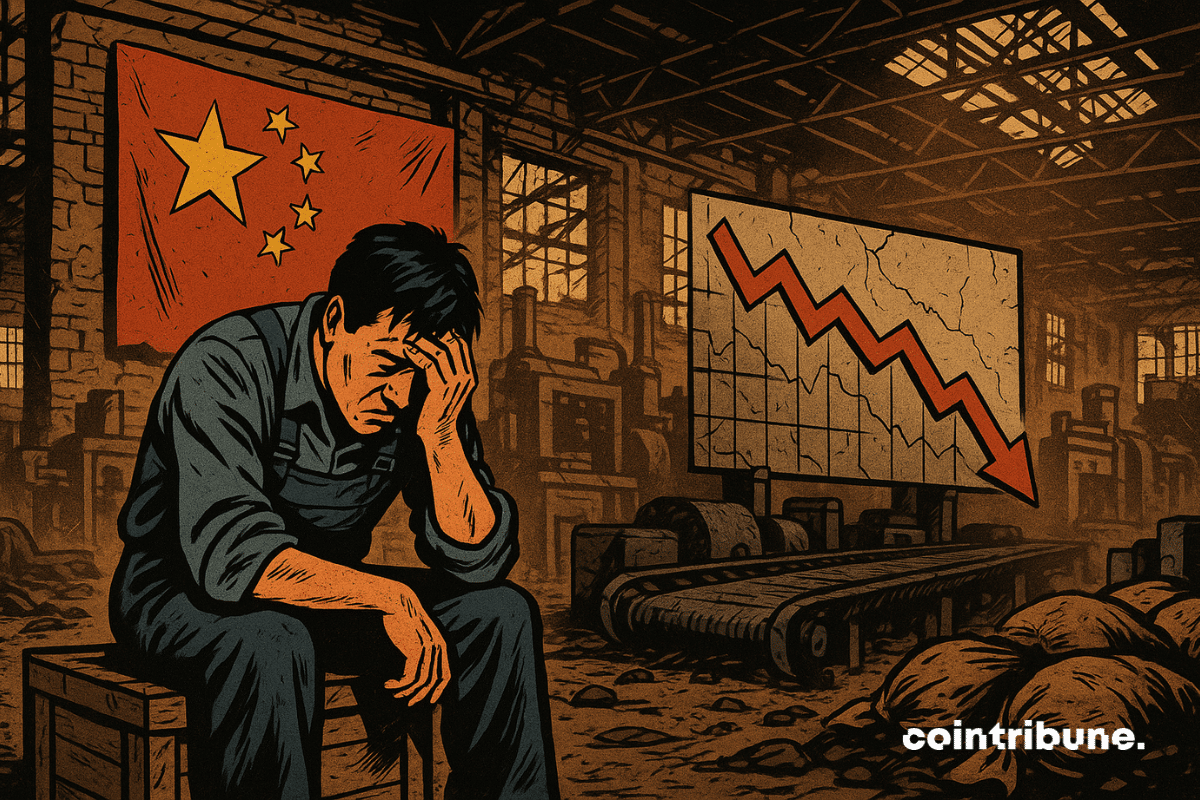
The global economic scene is in full turmoil. In just a few months, trade tensions between China and the United States have reached a new level, severely impacting the foreign trade of the Asian giant. Official figures released by Chinese customs indicate a brutal slowdown, much more pronounced than expected, in exports and imports. In the background, a declining internal consumption and an uncertain economic climate amplify concerns. As Beijing sets an ambitious growth target, this halt raises many questions about the country's ability to maintain its dynamism in the face of repeated attacks from Washington.
The fragile balance of the conflict in Ukraine has just experienced a new twist. Donald Trump, the American president, discussed the possibility of imposing massive bank sanctions and high tariffs against Russia. This statement comes as Moscow intensifies its strikes on Ukrainian infrastructure, while Washington's position wavers between conditional support for Kiev and seeking a diplomatic solution. However, this posture of firmness is accompanied by contradictory decisions, raising questions about Trump's true intentions in foreign policy.
The economic confrontation between the United States and China is taking on a new dimension. Indeed, far from being limited to traditional exchanges, this trade war is now affecting the crypto market. Thus, between Donald Trump's announcement regarding the creation of a national strategic reserve of cryptocurrencies and the Chinese response to American economic sanctions, investors are witnessing market movements of rare intensity. The question now arises: is this instability temporary or should we expect a lasting impact?
The figure has startled the markets: inflation in the eurozone was set at 2.4% in February, according to Eurostat. A slight decrease, indeed, but enough to reignite the debate on the European Central Bank's (ECB) next moves. Between cautious optimism and geopolitical clouds, the euro wavers on a tightrope. Behind these percentages lie contrasting realities: declining energy, resilient services, and a Germany that holds firm. An analysis of a somewhat muted economic landscape.
The global economy is evolving under the pressure of increasing trade tensions. As the United States imposes new tariffs, Europe finds itself facing a strategic dilemma. Balancing its traditional alliances and diversifying its economic partnerships, the continent is now looking towards the BRICS. This organization, once seen as a counterweight to the G7, is today consolidating its position by forging closer ties with Europe. This shift could redefine the economic and political power dynamics on a global scale.
Economic tensions between the United States and the European Union have reached a new high. Donald Trump, true to his protectionist policy, has just announced a dramatic increase in customs duties on European exports, raising their level to 25%. A brutal decision that far exceeds the 10% mentioned during his campaign and places Europe in a situation of diplomatic and economic urgency. The major powers of the Old Continent must now face a threat that could reshape global trade balances.
The idea of an income tax has long been a pillar of the tax policy in the United States. However, Donald Trump intends to challenge this model and proposes to completely replace it with an import tax system. A study conducted by Dancing Numbers claims that this project could generate significant savings for Americans, amounting to $134,809 per individual, and up to $325,561 by eliminating other levies on labor income. But this proposal, if it were to materialize, would not be without consequences for both consumers and the overall economy. Between the promise of increased purchasing power and the risks of trade tensions, this tax reform is already a subject of debate.
Sino-American relations continue to deteriorate, pushing China to strengthen its ties with the European Union. Lin Jian, spokesperson for the Chinese Ministry of Foreign Affairs, stated that Beijing sees Europe as a "global strategic partner and an important and independent pillar in a multipolar world."
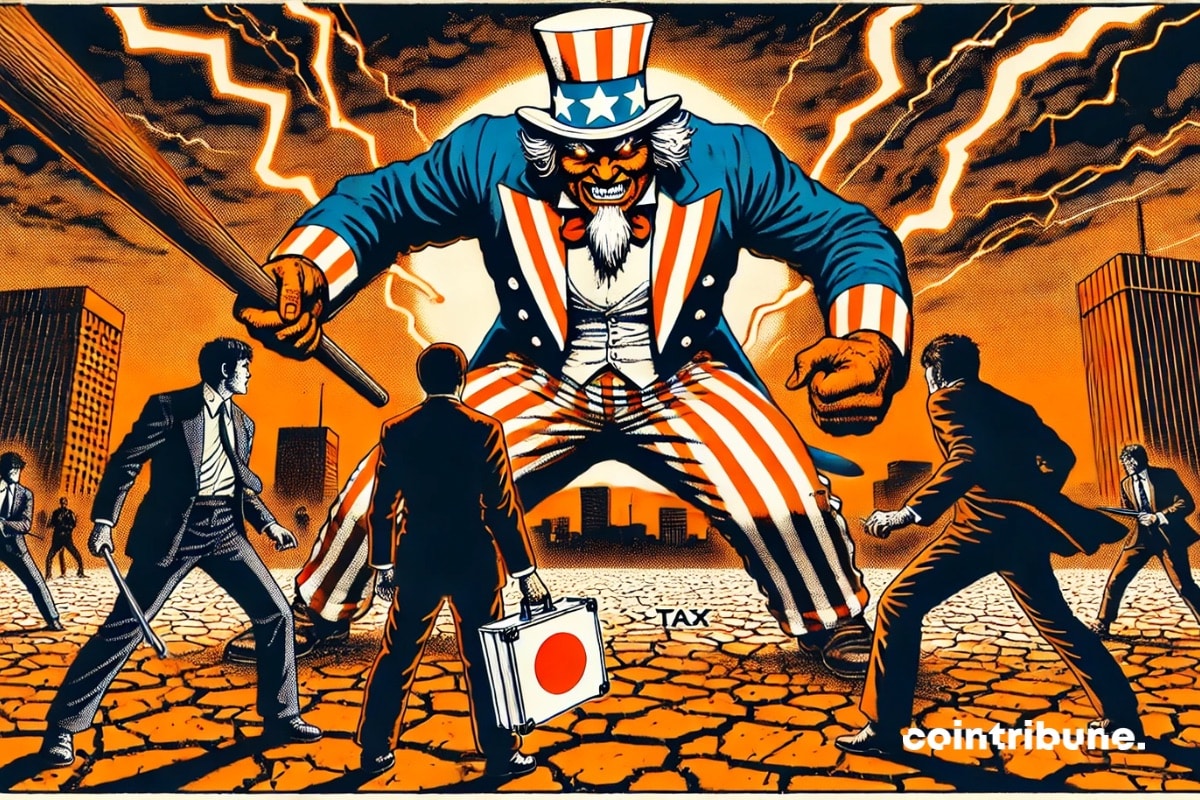
Trade tensions between the United States and its major partners have resurfaced, reviving the specter of a new economic war. Washington has announced an increase in tariffs targeting Canada, Mexico, and China, a decision that marks the return of the protectionism favored by Donald Trump. This tariff offensive has immediately sparked reactions everywhere, particularly in Europe, where the European Commission is closely monitoring the situation. Although the European Union is not yet directly affected, Brussels fears an expansion of American measures and warns that it will not remain passive. The Commission has already expressed its strong disagreement with this policy and states that it is ready to adopt retaliatory measures to protect the continent's economic interests. In the face of this new trade offensive from the United States, the risk of escalation between the two blocs cannot be ruled out.
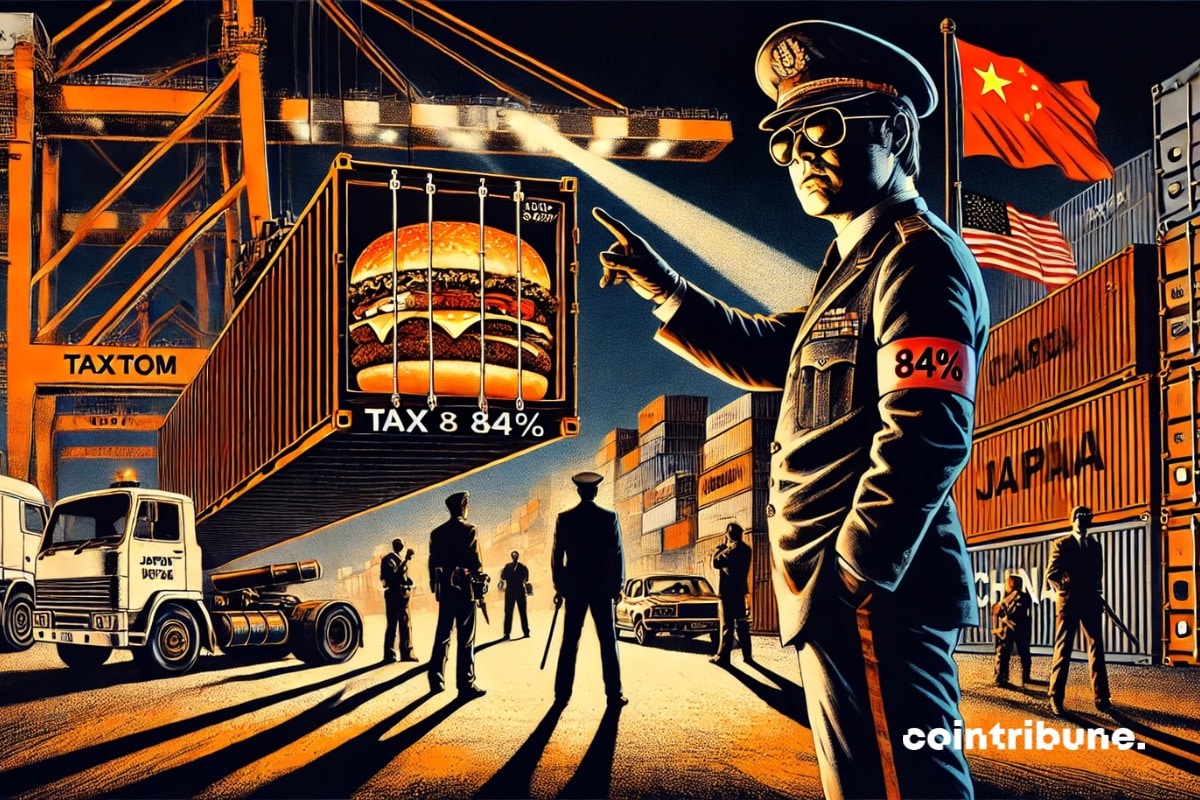
The United States is reviving trade tensions with its major economic partners. Donald Trump has just announced massive new tariffs on imports from Canada, Mexico, and China, and is reigniting an aggressive protectionist policy. Presented as a response to the fight against fentanyl trafficking and illegal immigration, this decision primarily fits into a broader strategy aimed at renegotiating North American trade agreements and protecting the American industry from Chinese competition. This escalation has immediately provoked a virulent reaction from the targeted countries, which are already preparing retaliatory measures, foreshadowing a new economic showdown with uncertain consequences.
The employment situation in France is experiencing a worrying deterioration. According to the latest figures published on January 27, 2025, by the Ministry of Labor, the number of unemployed job seekers without activity (category A) surged by 3.9% in the fourth quarter of 2024 compared to the previous quarter. This represents an additional 117,000 unemployed individuals, bringing the total to 3.1 million people, a level not seen in a decade, excluding the Covid-19 period.
The relationships between political leaders and financial institutions are going through a phase of great tension. Donald Trump, the President of the United States, has strongly criticized the Federal Reserve (Fed) and is calling for an immediate reduction in interest rates. This appeal, made during the World Economic Forum in Davos, comes at a time when the Fed, led by Jerome Powell, is maintaining a cautious approach in the face of persistent inflation and a strong labor market. Such a showdown highlights critical stakes for the American economy, raising questions about the independence of central banks on a global scale.
Transatlantic relations are experiencing a period of heightened tensions, marked by Donald Trump's return to the American presidency. In this context, Isabel Schnabel, a prominent member of the Executive Board of the European Central Bank (ECB), has sounded the alarm. She claims that a trade war between the European Union and the United States is "highly probable," due to the protectionist policies already announced by the American administration. If these measures, including high tariffs on European imports, were to materialize, they could destabilize the global economy. This threat, which particularly targets key sectors in the euro area, poses critical challenges for the future of international economic relations.