Why has the Bitcoin hashrate just fallen below the symbolic threshold of 1 zettahash per second? Are miners abandoning the network for more profitable AI (artificial intelligence)? A silent battle is redefining the future of mining and blockchain.
Reports of a renewed crackdown on Bitcoin mining in China’s Xinjiang region triggered concern across crypto markets this week. Early claims warned of severe hashrate losses and widespread shutdowns. Mining data reviewed after the initial reaction suggests, however, that the impact was brief and far smaller than first reported.
As the Bitcoin network crosses the zetahash threshold, the profitability of mining companies collapses. The hash price has fallen below 40 dollars per PH/s/day, a critical level that threatens the viability of many players. Faced with this paradox, companies in the sector are redirecting their strategies towards renewable energies. However, behind the ecological argument, it is an economic survival logic that dominates, revealing a profound transformation of the mining energy model.
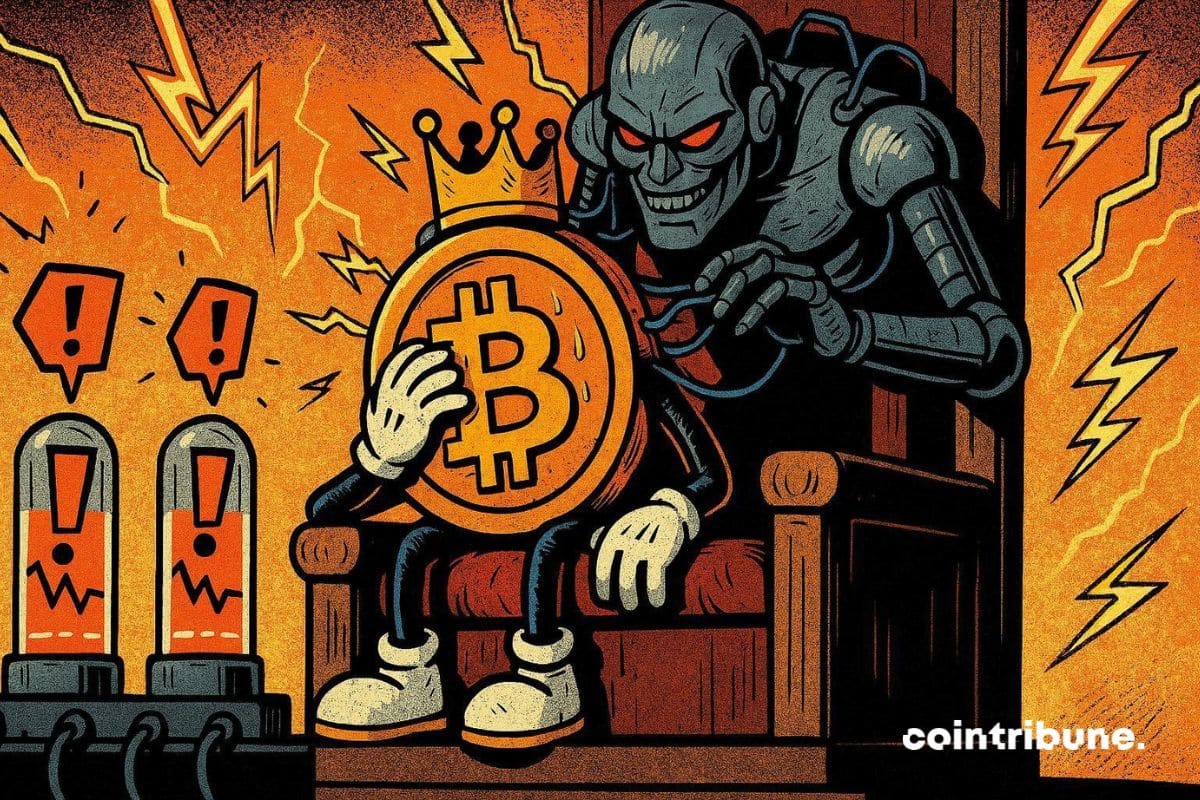
Bitcoin is collapsing, miners are coughing, and some flee to AI: when digital gold turns into an electric burden under maximum stress!
Bitcoin tumbles, miners migrate to AI. Microsoft pays, stocks rise… But their profits? Still striking. The future is now written between cloud and a gamble.
Banned but coveted, China plays it cool and reconnects its bitcoin machines. Silence in Beijing, but business is booming in provinces where electricity costs nothing.
Bitcoin miners are taking on record levels of debt to finance new equipment and expand operations into artificial intelligence (AI) and high-performance computing (HPC). As competition for hashrate intensifies and post-halving profits shrink, miners are increasingly turning to debt markets to maintain an edge in both Bitcoin production and data infrastructure growth.
American Bitcoin Corp. (ABTC)—co-founded by Eric Trump—has released its October 2025 investor presentation, marking a major milestone in its evolution from a pure Bitcoin miner to a full-scale digital-asset ecosystem. The strategy focuses on building a U.S.-based Bitcoin powerhouse to reinforce America’s leadership in the global Bitcoin market.
The Bitcoin network has never been stronger. Its mining difficulty has just reached an all-time high at 142.3 trillion, up 29.6% since January. This figure reflects both the rise in hashrate power and the growing pressure on mining companies. While the blockchain strengthens against potential attacks, technical and economic requirements impose an increasingly tough selection among sector players.
In August, bitcoin miners generated revenues close to 1.65 billion dollars, a level almost identical to that of July. This maintenance reflects an impressive resilience of the sector, despite a context marked by rising costs and energy pressure. But behind this apparent stability lie structural vulnerabilities that raise questions: can the current mining model really hold in the long term?
While mining profitability erodes and hashprice declines, the Bitcoin network records an unprecedented power rebound. On August 18, the hashrate climbed to 966 EH/s, nearing a historic peak, despite nearly zero transaction fees and growing economic pressure on mining companies. This striking contrast between economic tension and technical robustness raises questions: how does the mining ecosystem manage to maintain, or even strengthen, its security in such an unfavorable context?
Is bitcoin undervalued? A key indicator, the "Energy Value" from Capriole Investments, estimates that its "fair value" reaches 167,800 dollars, 45% above its current price. Designed by Charles Edwards, this model is based on the energy power used by the network. The unprecedented gap it reveals revives the debate about the true valuation of the asset and the market's ability to close this gap in the coming months.
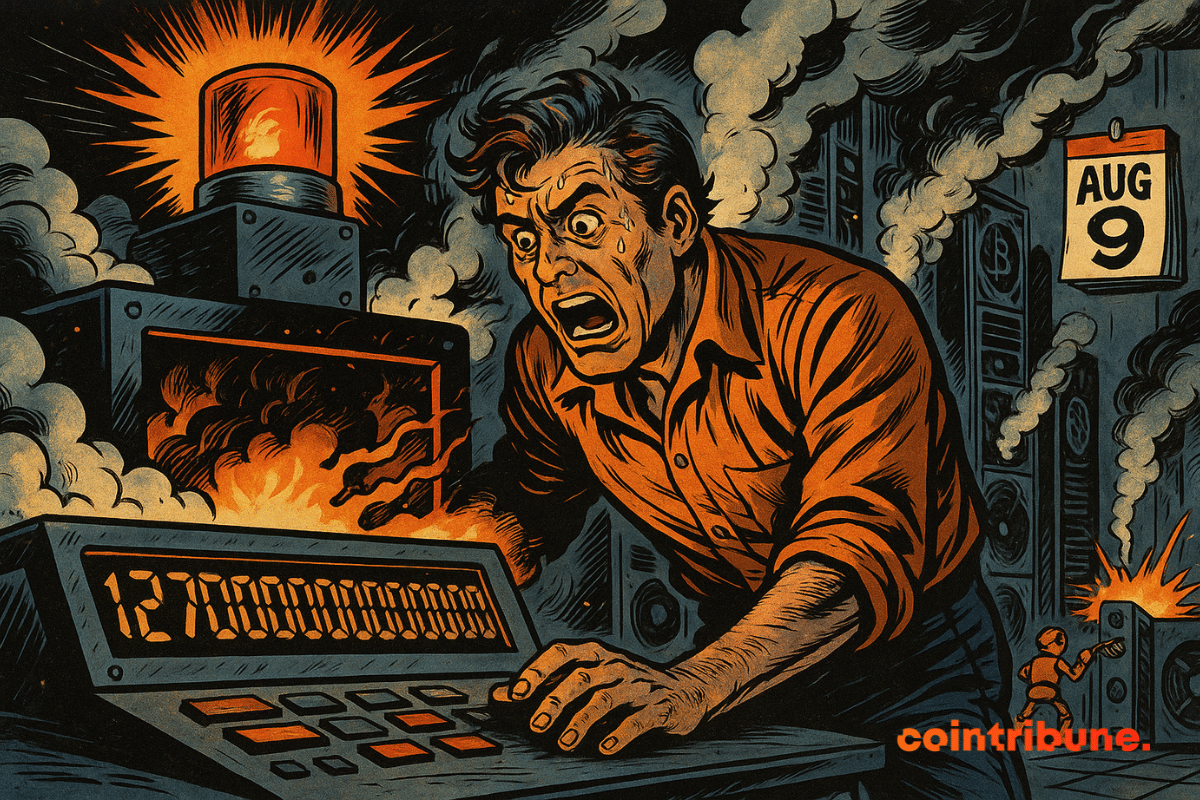
The Bitcoin network has just crossed a new milestone with a mining difficulty reaching an all-time high of 127.6 trillion. While this figure indicates enhanced security, it raises crucial questions about the sector's economic balance. Between maintained profitability and a frantic technological race, does this escalation mark the beginning of a new era of mining?
While the price of bitcoin is holding steady, its mining difficulty is climbing sky-high: a technical record that may hide more gold than speculation…
Bitcoin’s computational power has recorded an uptick in the previous day, surging close to previous levels—a trend that is viewed as a net positive for miners. As the higher hash rate boosts the blockchain’s security and robustness, miners benefit from increased profits.
While Moscow electrifies its farms and Beijing mines quietly, Washington subtly pulls the strings: but who is really pulling the strings of bitcoin in this strange energy game?
An unknown geek, armed with rented hash, snags $330,000 in bitcoin. Technical coincidence, bluffing move, or a silent revolution under the bits of solo mining?
In March, publicly traded mining companies sold more than 40% of their newly mined bitcoin, marking the largest monthly liquidation since October 2024. This trend breaks with the accumulation strategy observed after the last halving.
1 Zettahash, a technical victory for Bitcoin, but a chilling economic blow for miners: a record power that hides compressed margins and falling prices.
The Bitcoin network continues to surprise. While analysts expected a slowdown in hashrate after the April 2024 halving, the computing power mobilized by mining companies has just reached a historic record of 833 exahashes per second (EH/s), an increase of 9% in just a few days. This surge in power is explained by the massive investments made by mining companies, which anticipated the reduction in block rewards by strengthening their infrastructure. However, a surprising contrast emerges: despite a price hovering around 100,000 dollars, transaction fees are at historically low levels, which undermines the profitability of mining companies and raises questions about the economic balance of the network.
At $105,000 per Bitcoin, miners are singing in the rain of exahashes. Fierce competition, stellar margins: it’s a dance of numbers and electricity.
Mining involves using powerful computers to solve complex problems and validate transactions on the blockchain. Among the equipment used to mine Bitcoin, ASICs are certainly the most widespread in the industry. Discover everything you need to know to get started with ASIC mining!
Are you interested in mining Bitcoin (BTC) and hesitating to start with a processor (CPU)? Know that it is entirely possible to mine Bitcoin using the processing power of your computer. In fact, it is an easy way to get started in cryptocurrency mining, as you do not need expensive hardware or special knowledge. In this article, we will guide you through your first steps in CPU mining.
Have you ever heard of FPGA? It is a type of hardware used for mining cryptocurrency, whose popularity continues to grow. This article covers all the necessary steps to mine Bitcoin (BTC) with this device. But before diving into the heart of the matter, let’s start by defining the concept and what the advantages and disadvantages of this practice are.
The Stratum mining protocol is an essential component of the Bitcoin (BTC) network. It allows mining software to connect efficiently and securely to the blockchain, optimizing the mining process. Developed in 2012, Stratum has since become the most popular protocol used for mining bitcoins. In this post, we will explore the definition of this technology and the reasons why it is so important for Satoshi Nakamoto's network.
Bitcoin is a popular cryptocurrency that facilitates secure and decentralized exchanges. Each transfer of bitcoins from one user to another is a mathematically verified operation to ensure the reliability of exchanges. Let's see how these calculations take place in the network and how they contribute to the bitcoin mining process.
The hash rate or hashing rate in French is a measure that indicates the mining power of a computer per second. It is closely monitored by blockchain professionals because it allows for measuring the speed of Bitcoin mining. In summary, it is a data point used to evaluate the number of crypto-assets that can be mined with a given hardware. How is this rate measured? How does it vary? And what is its importance for miners and investors?
Bitcoin mining is the process by which new units of bitcoins (BTC) are created. It is an effective method if you want to acquire Bitcoin. But before you dive into this activity, you may be wondering how long it takes to generate BTC. In this article, we will explore this question in depth. You will discover, among other things, how difficulty, hash rate, and other parameters influence this metric.
Bitcoin is a digital currency that has quickly gained popularity in recent years. One of the key components of Bitcoin is the hash value, which is a unique identifier associated with each transaction and each Bitcoin block. In this article, we will explore what a hash value is and why it is so important for the Bitcoin blockchain.
The hashprice is a very important metric for crypto miners. It is particularly useful when it comes to determining the profitability of their operations. Therefore, if you are interested in Bitcoin (BTC) mining, or if you are simply a cryptocurrency enthusiast, you will probably want to learn more about it. This article explains in detail what hash price is and why it is so relevant in the crypto industry.