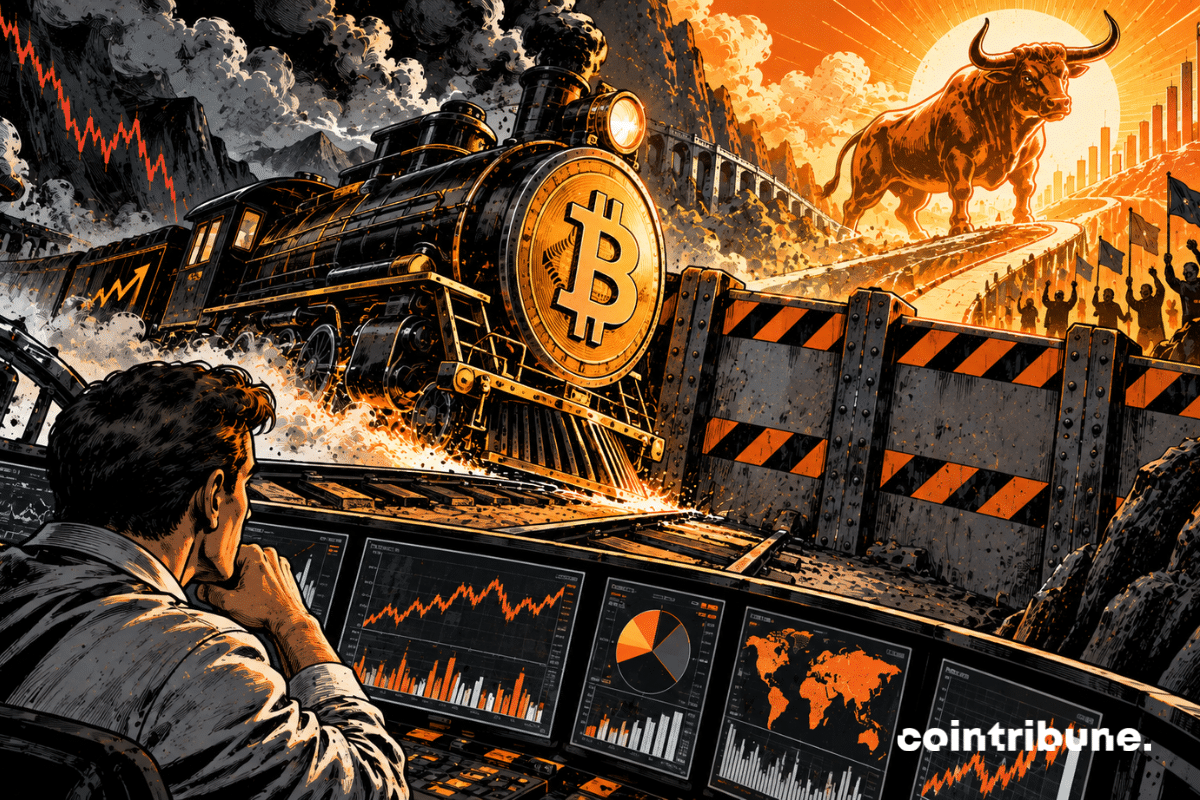
Michael Saylor puts one billion dollars back into bitcoin. Strategy bought 13,927 BTC between April 6 and 12, 2026, bringing its total reserve to 780,897 BTC. Despite volatility and latent losses, the accumulation machine is still running.
Hungary could become a more breathable ground for crypto after Viktor Orbán's fall. This political shift goes beyond Budapest: it also affects how the European MiCA rules will be applied, or overinterpreted, in a member state.
In a few hours, the price of oil has crossed the 100 dollar mark again after the announcement of a blockade of the Strait of Hormuz by Washington. This nerve center of global energy trade becomes again a major pressure lever in the confrontation between the United States and Iran. Behind this surge, an immediate risk: to see geopolitical tension turn into a global economic shock, with direct repercussions on inflation and financial markets.
PARIS, April 13, 2026 - Laurent Nuñez, Minister of the Interior, Anne Le Hénanff, Minister Delegate for Artificial Intelligence and Digital Affairs, Jean-Didier Berger, Minister Delegate to the Minister of the Interior, and Clara Chappaz, Ambassador for Digital and Artificial Intelligence, will speak at Paris Blockchain Week 2026, which will also welcome around twenty Members of the National Assembly.
The conflict between WLFI and Justin Sun reaches a decisive stage by entering a judicial phase. Between accusations of blacklisting, suspicions of token control, and lack of transparency, this case highlights potential governance flaws in DeFi and could mark a turning point for investors.
The countdown to the 2028 halving has already begun… and it exposes a reality that few investors anticipate. At the midpoint, the mining ecosystem enters an unprecedented tension zone, far from the balances observed during the previous cycle. Rising costs, increased competition, and structural changes reshape the rules of the game. This halfway point is not trivial, as it marks the beginning of a decisive turning point for companies in the sector as well as for the entire Bitcoin market.
Crypto news - Senator Lummis warns: the CLARITY Act must be voted now or wait until 2030. Full analysis in this article!
While the crypto market coughs and looks at its shoes, Saylor reloads the Bitcoin wheelbarrow. Fourteen billion in losses? Not even scared, he asks for more.
China has just sent a signal that could impact the global financial balance. By massively liquidating its US Treasury bonds while strengthening its gold reserves, Beijing is undertaking a strategic repositioning with potentially profound implications. Behind these figures, a dynamic is emerging that questions the dominance of the dollar and is already capturing the attention of markets, including the crypto market.
Perpetual contracts from traditional finance are exploding. In a few months, their volumes have tripled, driven by continuous and flexible trading. At the heart of this dynamic, Binance establishes itself as a key player, capturing a large share of liquidity and redefining market rules.
While Ethereum (ETH) stagnates around $2,200, the Glamsterdam upgrade enters advanced testing phase. Will this latest technical evolution be enough to revive the momentum of the second largest crypto network?
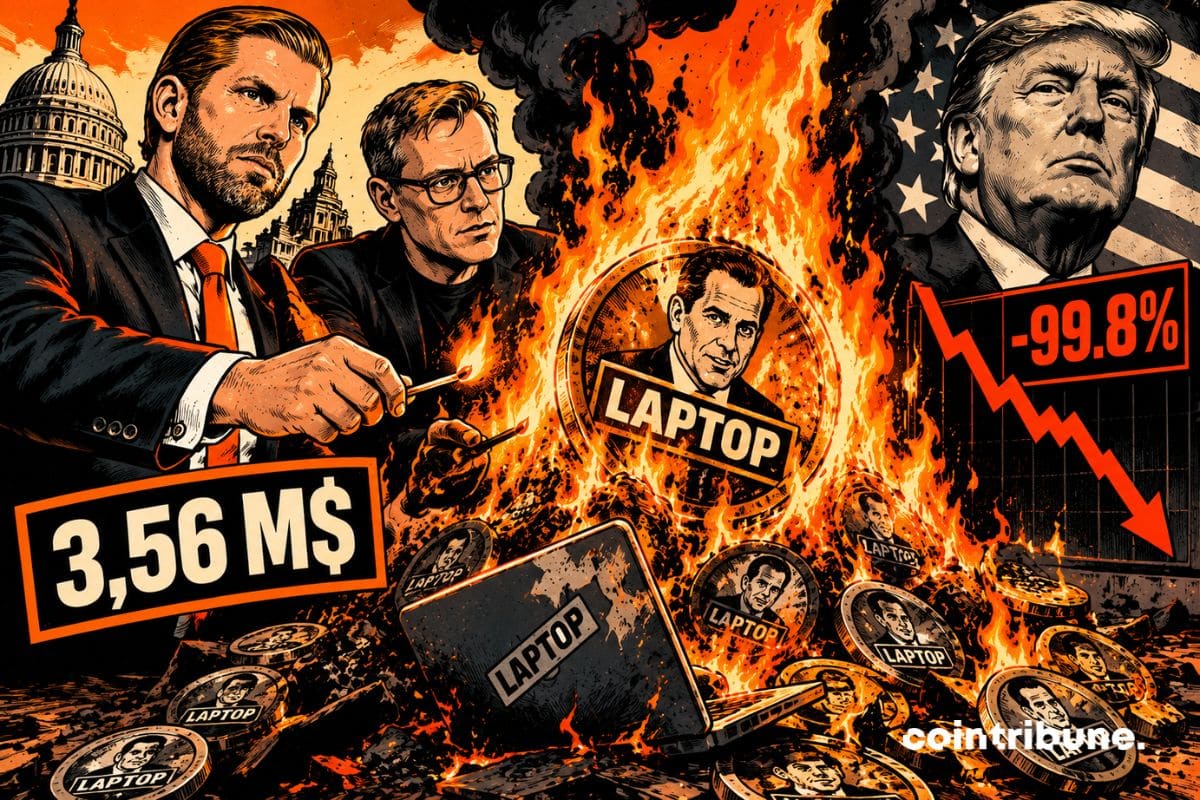
The story no longer looks like a simple speculative fall. It now takes the form of a political problem. As tokens associated with Donald Trump sink, the criticism changes tone. It is no longer just about losses for crypto investors. It is about access, influence, and conflict of interest. The fall of Trump-linked crypto projects now goes beyond market correction. The memecoin TRUMP hit an all-time low of 2.73 dollars and remains crushed by more than 96% compared to its peak of 73.43 dollars. Meanwhile, WLFI set a new floor around 0.077 dollar on April 11 and remains sharply down from its 2025 peak.
Six months after the October 2025 crash, the crypto market has still not regained its balance. Behind the apparent calm, scars remain visible. The question is no longer whether the storm has passed, but what it has truly left behind. Between structural fragility and the absence of clear momentum, the crypto ecosystem seems to be evolving on a much more unstable ground than it appears.
While the price of the crypto XRP tries to extend a recent rebound, activity on its network plummets. This divergence between market and actual usage weakens the ongoing momentum and raises questions about the strength of the movement. On-chain data therefore draws a signal that investors cannot ignore.
Bitcoin ETFs have just recorded their best week in nearly two months. A strong signal, as the crypto market was barely emerging from a dark streak marked by massive withdrawals and persistent volatility.
Bitwise sent the smell of hot powder around Hyperliquid and draws its ETF before others. On Wall Street, even the hype ends up in a suit.
Crypto is now establishing itself in areas where geopolitical tensions dictate the rules. According to Chainalysis, crypto payments related to Iran could expose certain companies to international sanctions. This signal comes as maritime transport players explore new ways to circumvent traditional constraints. Between financial innovation and regulatory risk, the use of blockchain in these sensitive contexts raises questions.
At World, the tap is closing a bit to create scarcity. WLD is twitching, traders are smiling, but the crypto market has known the song by heart for a long time.
98% of stablecoins depend on the dollar, a threat to Europe. The Bank of France demands urgent tightening of MiCA rules. Why this decision? What risks for investors and markets? Analysis of the issues and proposed solutions.
Coca-Cola and American Airlines explore XRP payments, illustrating the growing interest of major corporations in Ripple. Between innovation with the XRP Ledger and a more favorable regulatory framework, blockchain could sustainably transform global financial flows.
The United States transferred seized bitcoins to a Coinbase Prime address. The important point is not the amount, modest in market terms. The real signal is that Washington is increasingly treating confiscated bitcoin as an asset to be organized, stored, and integrated into a broader public strategy.
After a prolonged hesitation phase, buyers regain the initiative, supported by aligned technical and on-chain indicators. Traders now set a clear course for bitcoin at 88,000 dollars, in a context where the market structure recalls phases preceding major impulses. Between a critical threshold and strategic accumulation, a new dynamic seems to be settling, with a potential lasting shift in sentiment favoring bullish investors.
The Strait of Hormuz, a critical hub of global oil, could become the site of an unexpected monetary experiment. According to several revelations, Iran is considering imposing crypto payments on tankers passing through this strategic route. Behind this hypothesis lies an attempt to circumvent international sanctions while testing an alternative financial model. At the crossroads of energy and digital challenges, this initiative places bitcoin at the heart of an unprecedented power struggle between states and markets.
Bitcoin reaches 73,000 dollars amid a mixed macroeconomic context. The latest US inflation data signal a moderate price increase but mask a historic surge in energy costs. This gap fuels an uncertain market reading, between apparent stability and underlying tensions.
A secret meeting between the Fed and the Treasury, an AI model capable of hacking banking systems, and risks that could shake the global economy. Anthropic becomes an absolute security problem for regulators and banks.
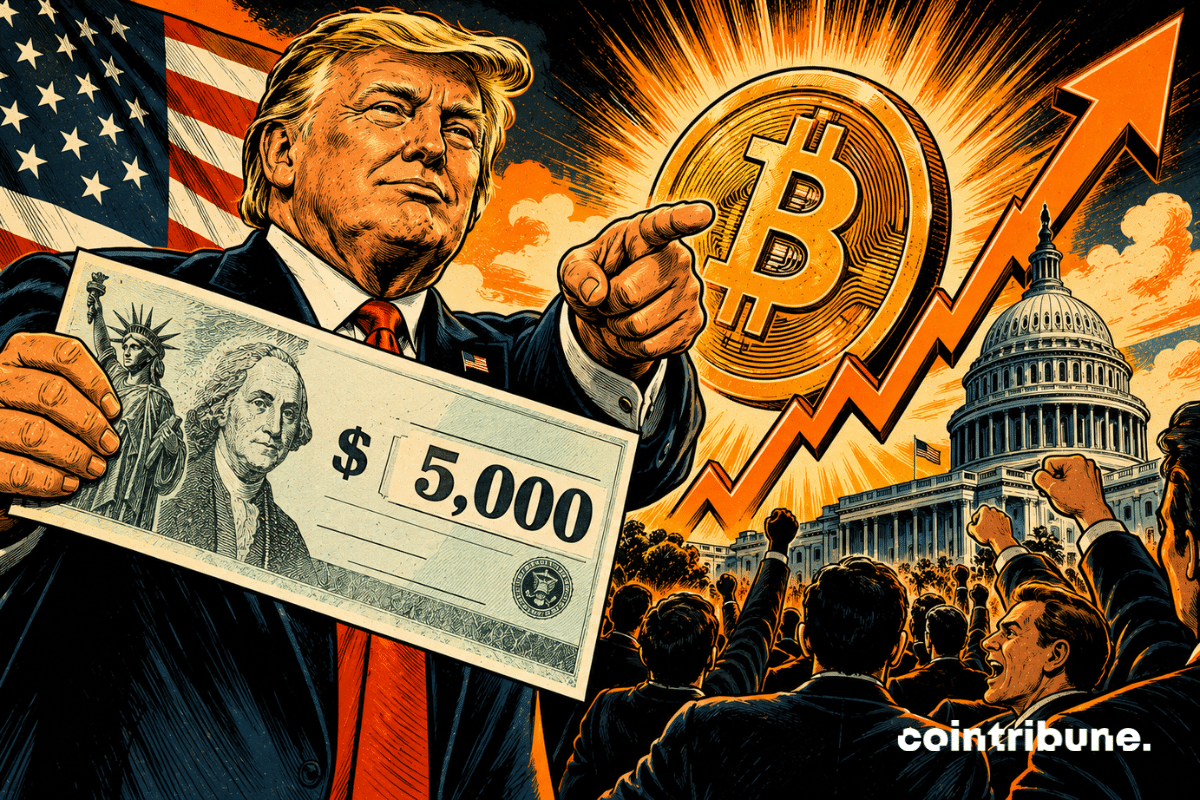
US President Donald Trump is set to attend a private lunch reserved for holders of the TRUMP memecoin on April 25. Problem: the same day, he promised to attend the White House Correspondents' Association dinner in Washington. A coincidence not missed by three Democratic senators, determined to get answers.
Japan is clearly shifting gears. By approving, on April 10, 2026, a reform that brings crypto assets into the realm of financial instruments, Tokyo no longer treats crypto as a mere extension of digital payments. The country now chooses a logic of market, oversight, and investor protection.
Crypto has settled into the French landscape but without causing a clear shift. In 2026, the topic no longer frightens as much. It intrigues, it circulates, it joins conversations. Yet, when it comes time to buy, France is still moving forward in small steps.
Meta commits 21 billion dollars in a strategic partnership with CoreWeave, marking a new milestone in the race for artificial intelligence. This agreement reveals a major evolution in the sector: the competition is shifting towards infrastructure and computing power. Behind this announcement, a reconfiguration of the technological landscape is emerging, driven by the rising demand for resources and the emergence of new specialized players.
Crypto trading is changing dimension. Binance introduces prediction markets directly into its wallet, opening the way to a new form of speculation based on the outcome of real events. Accessible from its application, this feature allows users to buy and sell probabilities in a few clicks, without going through external interfaces. By integrating these on-chain mechanisms in a centralized environment, the exchange redefines uses and accelerates the convergence between finance, information, and blockchain.