New layoffs and a daring change to payments are announced by Polygon. Is the POL cryptocurrency going to take off or is it in danger? Explore our analysis to learn about the risks associated with this potentially game-changing tactic.
France's 2-0 defeat against Spain on July 14, 2026, relieved the accounts of American bookmakers by resolving their last major liability. Meanwhile, prediction platforms recorded a record volume, without needing the correct forecast to win. Has the World Cup definitively validated the future of predictive markets against traditional betting?
Crypto.com has just reached a major institutional milestone. Citadel Securities invests 400 million dollars in the exchange, now valued at 20 billion dollars. This operation confirms a clear shift in the crypto market: the big players on Wall Street no longer just observe. They buy a seat in the infrastructure.
The inexorable advance of cutting-edge quantum computing poses an existential threat to blockchain security, forcing the ecosystem to revise its cryptographic foundations. Preserving inactive Bitcoin wallets against machines capable of breaking private keys is a critical priority. On July 16, Project Eleven unveiled a post-quantum cryptographic proof proposal to address the "Q-Day" challenge. By replacing signature validation with lineage verification, this protocol offers an unexpected safety net.
For her first appearance post-OpenAI, Mira Murati unveils an open-weights AI model. Discover the technical details of this innovation.
The scenario of a bitcoin freed from its cycles thanks to the arrival of institutional investors is wavering. While the market was settling into almost unanimous confidence, NYDIG cools the ardor with an analysis that recalls an old rule: every phase of euphoria eventually calls for a correction. According to the investment company, quantitative models now reveal a marked decline in the price of the flagship crypto, reigniting the debate on the strength of the current bull cycle.
As debates around the use of the Bitcoin blockchain multiply, a new technical proposal reignites tensions within the community. Named BIP-110, this project aims to temporarily limit the inscription of non-financial data on the network to reduce what its promoters consider spam, notably the Ordinals, BRC-20, and Runes protocols. While some see it as a necessary evolution to preserve Bitcoin's efficiency, others believe it challenges the protocol's neutrality and its founding principles. Does BIP-110 represent an advance for Bitcoin or a risk for the network's future?
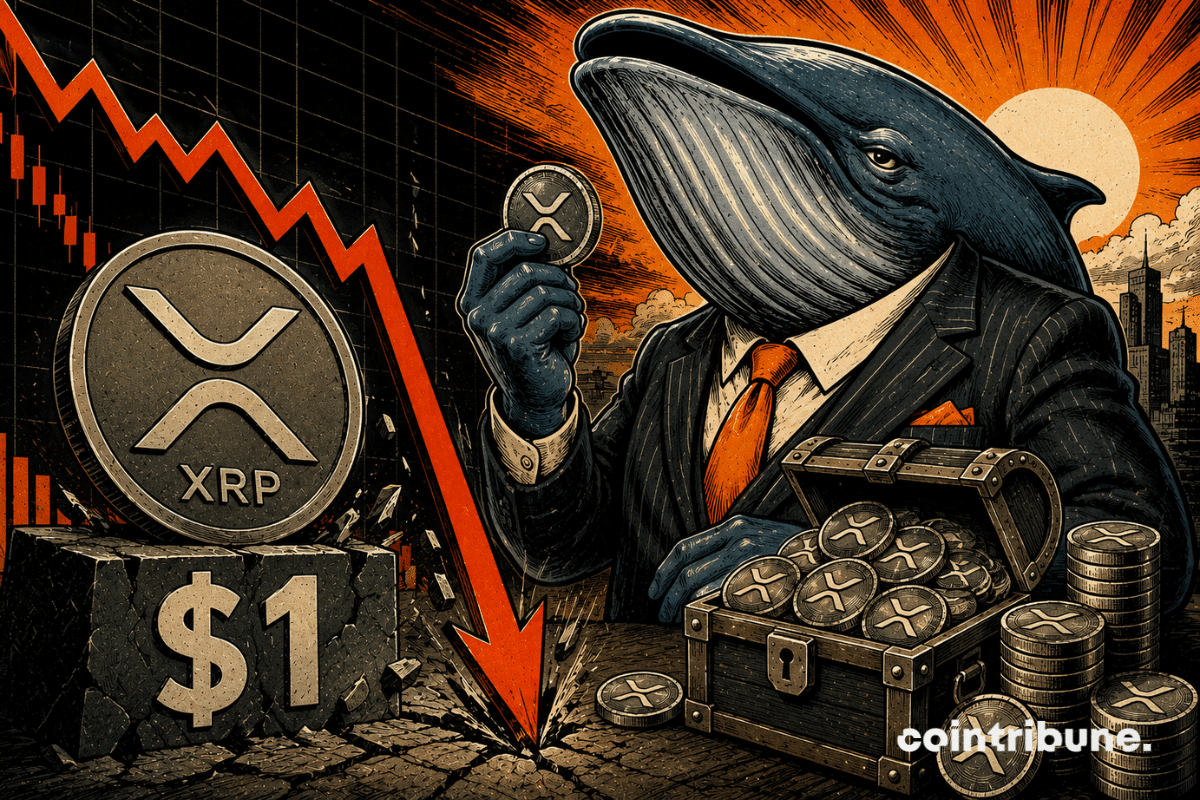
Are the largest XRP holders sending a signal that the market has not yet fully integrated? While cryptocurrencies are evolving in an environment of uncertainty, a closely monitored on-chain indicator by analysts has just dropped on Binance to its lowest level in two months. Behind this movement, there may be a strategic shift among whales, those investors capable of influencing trends. Imminent selling, simple redistribution, or preparation for a new cycle? The data opens several leads.
On July 1, 2026, the transition period under the MiCA regulation officially closed: any crypto platform serving European clients must now hold a proper CASP license, or stop operating. On paper, the regime promised a clear, fast pathway. In practice, even Binance, the world's largest exchange, found out otherwise. We take a closer look with Yuliya Barabash, founder and managing partner of SBSB Fintech Lawyers, who has advised on more than 150 licensing files worldwide.
The cryptocurrency market continues to look for clues that can confirm the end of the recent phase of price weakness. Several on-chain data points are now attracting the attention of analysts, who are trying to identify the first signs of a lasting reversal. In this context, Bitcoin once again finds itself at the center of Glassnode's observations. An indicator followed by its research team shows that selling pressure from investors may begin to ease, even though several technical levels remain decisive.
Cards or stablecoins? Visa answers: both, according to a report with Artemis on the future of AI-driven crypto payments.
OpenAI presented on Wednesday, July 15, 2026, an automated red-teaming tool named GPT-Red, tasked with strengthening GPT-5.6's resistance to prompt injection attacks. The concept starts from a simple observation: human intrusion testing methods no longer keep pace with the models' capabilities. The challenge is now growing, as these vulnerabilities directly affect the security of autonomous agents.
The US Senate has just sent a harsh message in the FTX case: Sam Bankman-Fried should not receive any presidential pardon. This resolution does not legally block the power of the president. But it further isolates the former king of crypto, already sentenced to 25 years in prison for one of the largest financial frauds in American history.
Tokenization has just reached a major milestone on Wall Street. More than 30 financial players participated in the DTCC test, which moved securities held in its central depository to blockchain networks. This is no longer a showcase demonstration. It is a market trial, involving banks, exchanges, asset managers, and crypto infrastructures.
Cryptos are no longer just a playground for speculation. For Larry Fink, CEO of BlackRock, the market is entering a new phase driven by tokenization, better risk management, and more rigorous project selection. Interviewed on CNBC on July 15, 2026, the leader of the world’s largest asset manager delivered a comprehensive vision beyond bitcoin. At a time when investors seek more stability than promises, his statements illustrate the accelerated convergence between traditional finance and the crypto ecosystem.
The blockchain application ecosystem is evolving rapidly, and network priorities change at the pace of usage. Several players are now reassessing their strategic choices to meet user expectations. In this context, crypto takes a new turn with statements from Jesse Pollak, creator of Base. He publicly acknowledges that the platform took a wrong direction by favoring social experiences. He now believes that this choice caused a loss of valuable time in the face of the rise of prediction markets and perpetual contracts.
Decentralized prediction markets are experiencing a meteoric rise, to the point of becoming true barometers of market expectations. However, this growth hides a major flaw. A university study reveals that sophisticated actors manage to manipulate certain very short-term contracts to influence the price of the leading crypto. These findings highlight the limits of a booming sector, even as prediction platforms attract the attention of regulators and establish themselves as a new battleground between financial innovation and state oversight.
Aave DAO proposes an App that promises to disrupt crypto with fiat, self-custody and lending all in one place. Does Binance have reason to worry? Between innovation and regulation, this breakthrough could redefine the rules of the game.
The economic monopoly of the West now hangs by a thread, and it is no longer marginal theorists who say this, but the very architects of global finance. Twenty-five years after theorizing the emergence of the economic powers of the South, Lord Jim O’Neill presents an uncompromising assessment of the G7's inability to adapt to the new global landscape. As the international financial network fragments under the weight of sanctions and geopolitical tensions, this reassessment sounds like a major warning for the supremacy of the US dollar.
Bitcoin now has 32% adoption among major global banks, according to an index published by Strategy. Michael Saylor, founder of the first BTC reserve company, considers this breakthrough promising but still premature. Is the market on the verge of a banking shift?
Three Democratic senators won't back the crypto bill without ethics safeguards against Trump's $1.4 billion windfall. They're calling him out.
PayPal is facing a $53 billion takeover bid led by Stripe and Advent International. The deal, if confirmed, could reshape the digital payments sector. It would also have a strong crypto dimension, as PayPal and Stripe are already accelerating on stablecoins, blockchain accounts, and global settlements.
Bitcoin has been trading cheaper in the United States than in the rest of the global market for 50 consecutive days. This rare signal comes from the Coinbase Bitcoin Premium Index, which remained negative until July 7–8. Behind this subtle gap, a reality is confirmed: American demand for BTC shows signs of fatigue.
Predictive markets are gradually gaining their place in digital tools designed for the general public. Technology platforms are now exploring new ways to present this data to enrich user experience. In this context, OpenAI is starting to integrate Kalshi's forecasts into ChatGPT's search results dedicated to the FIFA World Cup. This development marks the first known collaboration between the artificial intelligence company and a platform specialized in prediction markets.
XRP is about to reach a new milestone in Japan. On July 13, Doppler Finance and SBI Digital Finance announced a strategic partnership aimed at developing financing solutions backed by Ripple's asset. Far more than a simple commercial agreement, this alliance illustrates the rise of tokenized finance in a country that has become one of the most favorable grounds for the institutional integration of crypto. As infrastructures consolidate, Japan establishes itself as a full-scale laboratory for the financial uses of XRP.
The ECB accelerates its crypto project. 36 players selected to test its CBDC from 2027. All details in this article!
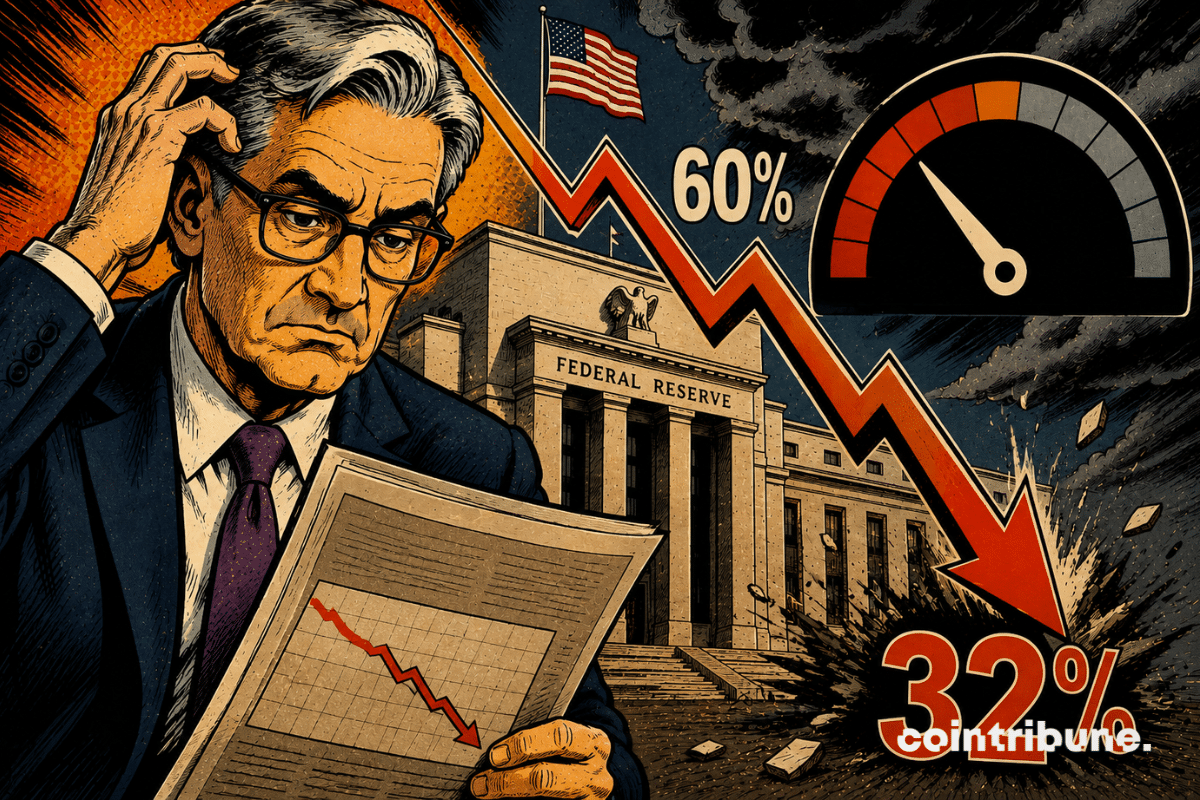
The constant interaction between traditional macroeconomics and the crypto market has just passed a new decisive milestone on an international scale. While the US Federal Reserve (Fed) has maintained a strict monetary policy for months, the release of the latest economic indicators has shaken all investors' certainties. On Tuesday, July 14, at the opening of the Wall Street session, the price of the leading crypto recorded an upward impulse, once again crossing the major psychological resistance of $64,000. This responsiveness reveals the persistent dependence of assets on US macroeconomic data, particularly inflation trends.
Seventy-six banking groups, led by the American Bankers Association and the Independent Community Bankers of America, urged the Senate on Monday, July 13, to amend the Clarity Act before its vote. They point to a "loophole" in section 404 that would allow platforms to pay, in the name of the reward, yields equivalent to bank interest on stablecoins.
A few weeks before the major correction in October, I argued in my market analyses that the bull market had come to an end. I recommended selling all positions around $120K, as I believed we were entering a bear market. My outlook has not changed since then. Small rallies followed by sharp pullbacks are completely normal during a bear market.
Has bitcoin already reached the peak of this cycle, or is the market about to surprise investors once again? While volatility feeds fears and corrections multiply, on-chain data offers a nuanced reading of the situation. CryptoQuant indicators reveal the evolution of investors' profits, while recent purchases by large whales raise questions about a possible return of confidence. Between encouraging technical signals and macroeconomic uncertainties, the market today sends contradictory messages.