Wed 02 Jul 2025 ▪
3 min read
▪
by
Bitcoin shows $1.2 trillion in unrealized profits. Why is no one selling despite +125% gains? Analysis of the signals to know.
Bitcoin shows $1.2 trillion in unrealized profits. Why is no one selling despite +125% gains? Analysis of the signals to know.

Less than 15% of bitcoins are still accessible on exchanges. Behind this figure lies a silent dynamic: the scarcity of liquid supply. As institutions appropriate the asset, analysts see it as a signal of an increasing imbalance between available stock and strategic demand. A shift is looming in the mechanics of the market.
Bitcoin’s price holds steady while traders shift from buying puts to selling calls, signalling growing confidence amid rising institutional demand and hints of a possible breakout later in the year.

Crypto ETPs attracted $17.8B in H1 2025, nearly matching 2024 levels, driven by strong institutional demand and Bitcoin’s lead.

It had been a long time since Bitcoin miners had been caught off guard by such a mining difficulty adjustment.

When bitcoin ETFs are making numbers like never before, investors are jigging while Wall Street rediscovers crypto, their eyes fixed on curves that rise steadily.
Michael Saylor and Adam Back have just unveiled a bold roadmap to propel BTC to 3 million dollars. Their model aims to transform traditional businesses into ultra-efficient bitcoin acquisition machines.
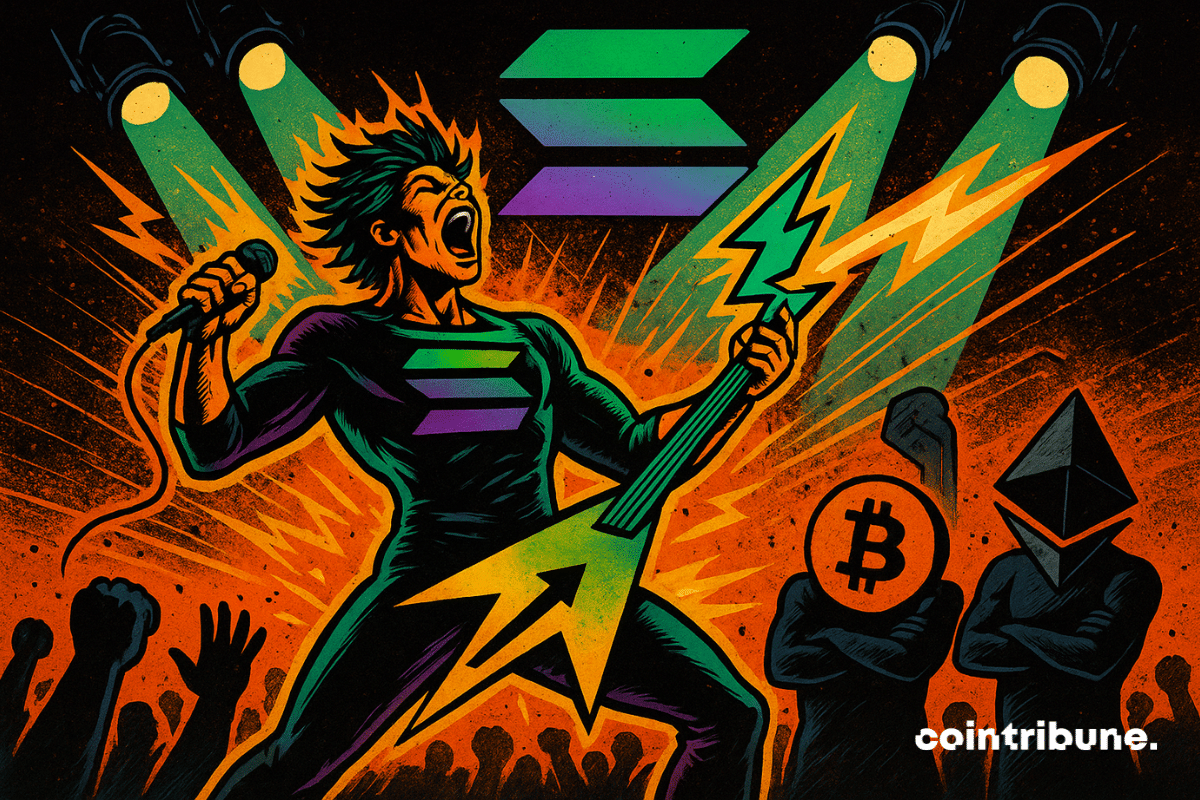
While Bitcoin and Ethereum are cautiously progressing in a calm market, it is Solana that is stealing the spotlight. In just one week, its price has soared by 16.5%, eclipsing the performances of the two historical pillars. This breakthrough is not trivial: it comes in the context of a return to fundamentals, where investors are once again scrutinizing technical signals and the robustness of projects. Solana, long relegated to the background, now seems to be repositioning itself as a serious contender for leadership in the next cycle.
While the markets hesitate, Saylor is accumulating bitcoins by the thousands. Another 4,980 units? At this rate, it's the FED that will end up calling him.

As the second quarter comes to a close, Bitcoin may well be writing a new chapter in its history. The $109,000 mark is within reach, and the technical signals are converging. However, behind this bullish momentum, tensions are emerging: a demand deficit, liquidity games, and uncertainty about American interest rates. Could the June monthly close change everything?

The crypto market is taking a strategic turn. After a tumultuous June marked by geopolitical tensions and price volatility, July is emerging as an unprecedented window of opportunity. While Bitcoin remains firmly above $100,000, bullish signals are multiplying, supported by the return of institutional flows. In this climate full of expectations, five cryptocurrencies are emerging as must-haves to capture the momentum of the next bull run.

Metaplanet becomes the 5th largest holder of bitcoin with 13,350 BTC, surpassing Tesla. All the details in this article!

Michael Saylor has just confirmed his 11th consecutive week of Bitcoin acquisitions, an impressive streak that perfectly illustrates his relentless accumulation strategy. With 592,345 BTC in reserve, his company Strategy is becoming a true fortress of Bitcoin. But how far will he go?
And what if one of the largest silent bets on Bitcoin had finally been brought to light? A recent analysis by Arkham Intelligence reveals that Tesla and SpaceX together hold over $2 billion in BTC, including $1.5 billion in unrealized gains. Until now, only Tesla had communicated about its purchases. SpaceX, for its part, had never leaked any information. These revelations shed light on Elon Musk's crypto strategy, which is much more committed than it appears.

The bitcoin market is holding its breath. As the flagship crypto flirts with 109,000 dollars, a level never before reached in weekly closing, the spotlight is on an electrifying weekend. At the intersection of technical analysis and the psychological warfare between traders, BTC seems ready to break a symbolic and historic ceiling. The signs are there: a persistent bullish structure, affirmed technical signals, and above all, the striking return of a name that alone is enough to shift the market's lines. This is not just a simple rise; it is a potential shift in era for bitcoin.

At a summit in Washington on Bitcoin-related policies, Alex Gladstein, strategist for the Human Rights Foundation, made a shocking statement: "Bitcoin is bad for dictators." For him, it is a tool of resistance against authoritarian regimes. This stance resonates even more strongly as the United States, for their part, are quietly building their own strategic reserve in BTC.
It's hard to believe, but Donald Trump is favorable to bitcoin becoming the international reserve currency par excellence.
A Solana ETF that stakes, analysts rejoicing, and the SEC saying nothing... Could REX Shares be trying to make crypto dance on the regulatory floor?

Valeria Fedyakina, a 24-year-old Russian influencer known online as “Bitmama,” has been sentenced to 7 years in a prison colony after running a major crypto scam that stole over $21 million from investors. Russian prosecutors say some of the stolen funds were used to support Ukraine’s military, a claim that adds a geopolitical twist to this case.

Since Bitcoin established itself as a serious store of value in the eyes of companies, a new category of players has emerged: Bitcoin treasury companies. Presented as the pioneers of the finance of the future, they are now faced with a harsh reality. According to a chilling report from the venture capital fund Breed, the vast majority of them are on the verge of extinction, trapped in a spiral that is as predictable as it is fatal.
Fewer movements, more silence: Bitcoin breathes. But behind the candlesticks, Trump is getting angry, Powell is trembling, and the dollar is melting... Is it enough to awaken a sleeping crypto queen?
While public opinion gets bogged down in debates over ETFs and speculative bubbles, the U.S. government is taking action. Discreetly, but resolutely. Behind the walls of the Capitol, a strategic reserve of bitcoin is being established. This is no longer theory: it is now confirmed. And this revelation changes the game.
Wall Street continues to set records, and crypto holds its breath. As the Nasdaq and S&P 500 reach historical highs, the prospect of monetary easing by the Fed revives bullish scenarios. In this climate of optimism, a question arises: is Bitcoin ready to cross a new symbolic threshold? With favorable macroeconomic signals and renewed institutional interest, the hypothesis of BTC exceeding $112,000 resurfaces, fueled by the dynamics of traditional markets.
Bitcoin’s long-term holders hit record accumulation, showing strong confidence amid steady market conditions.
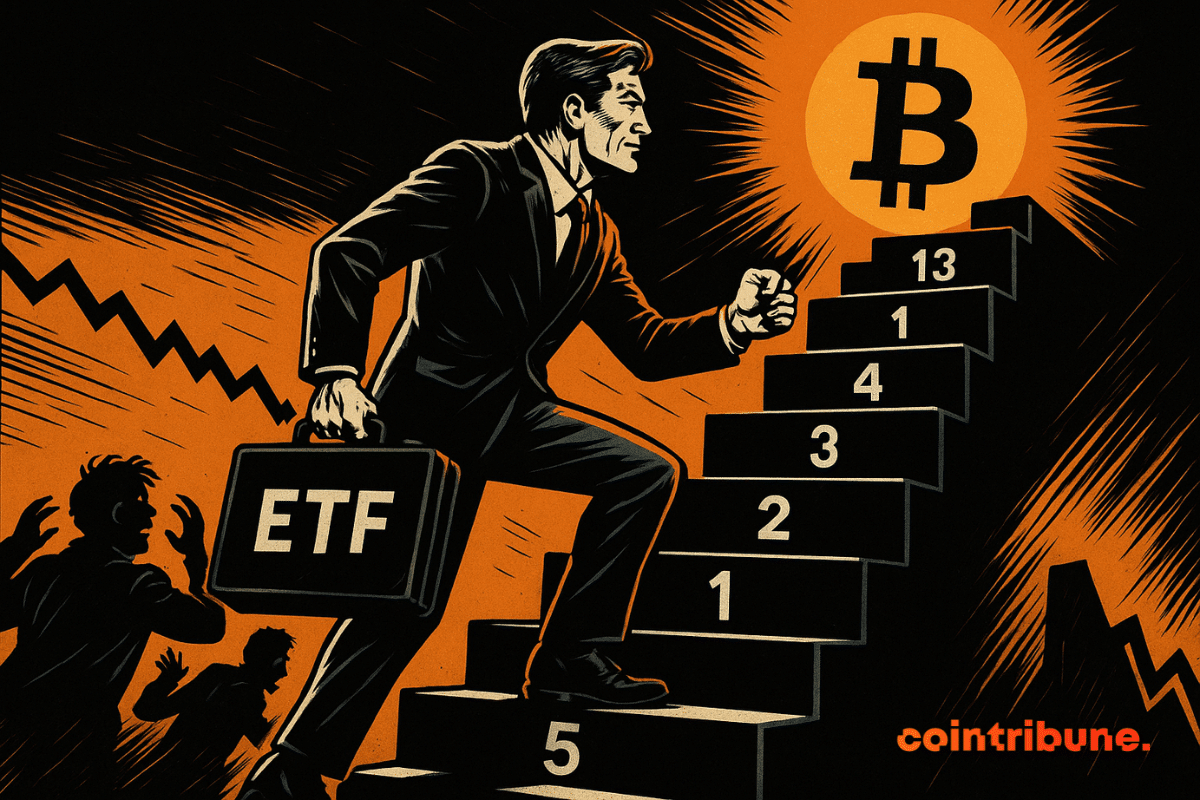
The bitcoin market, usually quick to get excited at the slightest institutional whisper, seems today to be sending a clear message: long-term confidence is present. For 13 consecutive days, Bitcoin ETFs in the United States attracted nearly 3 billion dollars, an undeniable sign that major investors are no longer betting solely on a hype effect but on a solid trend.
Has the crypto casino definitely closed its doors? Probably. There are signs that cannot be mistaken...

In recent days, the crypto market has been closely watching a particularly reliable technical model. With a historical accuracy of 78%, this model could herald the imminent arrival of a new peak for Bitcoin. Is the market ready to surpass its previous records?

Billions are flowing in, but Bitcoin remains stagnant. While spot ETFs recorded record inflows in June 2025, the leading cryptocurrency barely reacts. Just a 2% increase for the month is a trivial move in a market accustomed to violent surges. This unexpected calm, despite unprecedented institutional momentum, raises questions among observers. What does this inertia really reveal? Behind the visible flows, a new equilibrium is emerging in the crypto arena, far from the classic patterns of speculative euphoria.

The race for bitcoin among companies has taken a new turn. Metaplanet, a Japanese company undergoing transformation, has just surpassed a symbolic milestone by overtaking Tesla in the ranking of the largest corporate bitcoin reserves. Who would have imagined that a struggling former hotel company would compete with Elon Musk's giant?

Will crypto replace banks for AI? The radical hypothesis of Tether is becoming clearer. The details in this article!