Despite the recent price drop, the financial analysis firm Bernstein remains optimistic and maintains its ambitious forecast of $200,000 for bitcoin. Its analysts view this correction as a strategic buying opportunity ahead of the next cycle peak.
A European Central Bank (ECB) advisor, Jürgen Schaaf, recently reaffirmed the institution's critical stance on bitcoin, stating that there is "no real economic necessity" for this cryptocurrency. According to Schaaf, unlike strategic reserves of commodities such as oil or gas, BTC does not present any real economic utility or relevant usage.
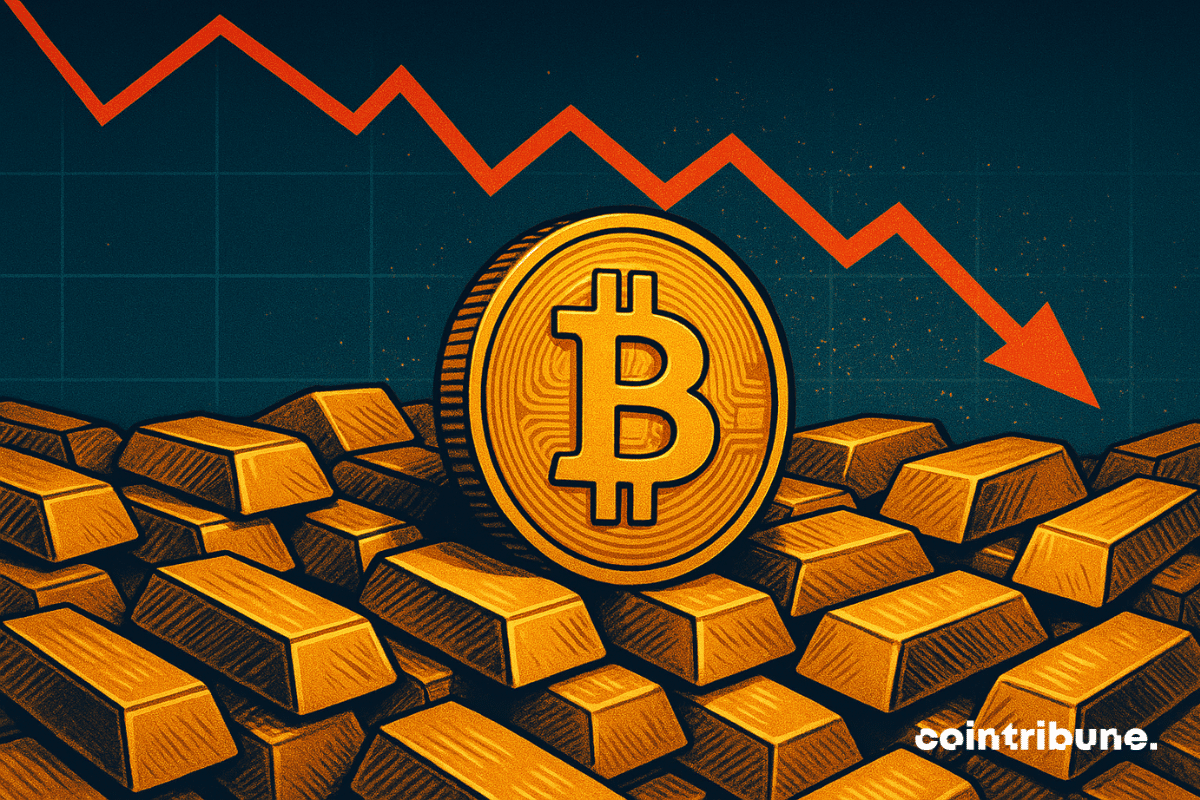
Bitcoin, the wavering king, falls below $90,000, wept over by runaway ETFs, drowned in a billion liquidated, against a backdrop of farcical Sino-American disputes.
With the rise of cryptocurrencies, one question often arises: can one live solely on bitcoin? This is the challenge that Martin, a crypto-enthusiast adventurer, took on as he traversed Switzerland, paying exclusively in BTC. His journey, documented in a captivating video, tests the adoption of Bitcoin in a country known for its openness to cryptocurrencies.
After a consolidation around $96,500, Bitcoin faced selling pressure, bringing its price down towards the support level of $89,000. Check out Elyfe's analysis to decipher the technical perspectives of BTC.
As Bitcoin continues to capture the attention of markets, the latest data shows a stark contrast between network activity and its net capital. Daily transfer volume has fallen by 76%, while realized capitalization has surged by $160 billion in three months. A dynamic that raises questions: are we witnessing a critical slowdown or a strategic consolidation before a new bullish momentum? Since its last peak beyond $100,000, Bitcoin has struggled to maintain its momentum. The pressure is intensifying, and some analysts anticipate a possible drop below $90,000. However, despite a significant decline in activity, the influx of fresh capital and the resilience of long-term investors present an interesting counterpoint.
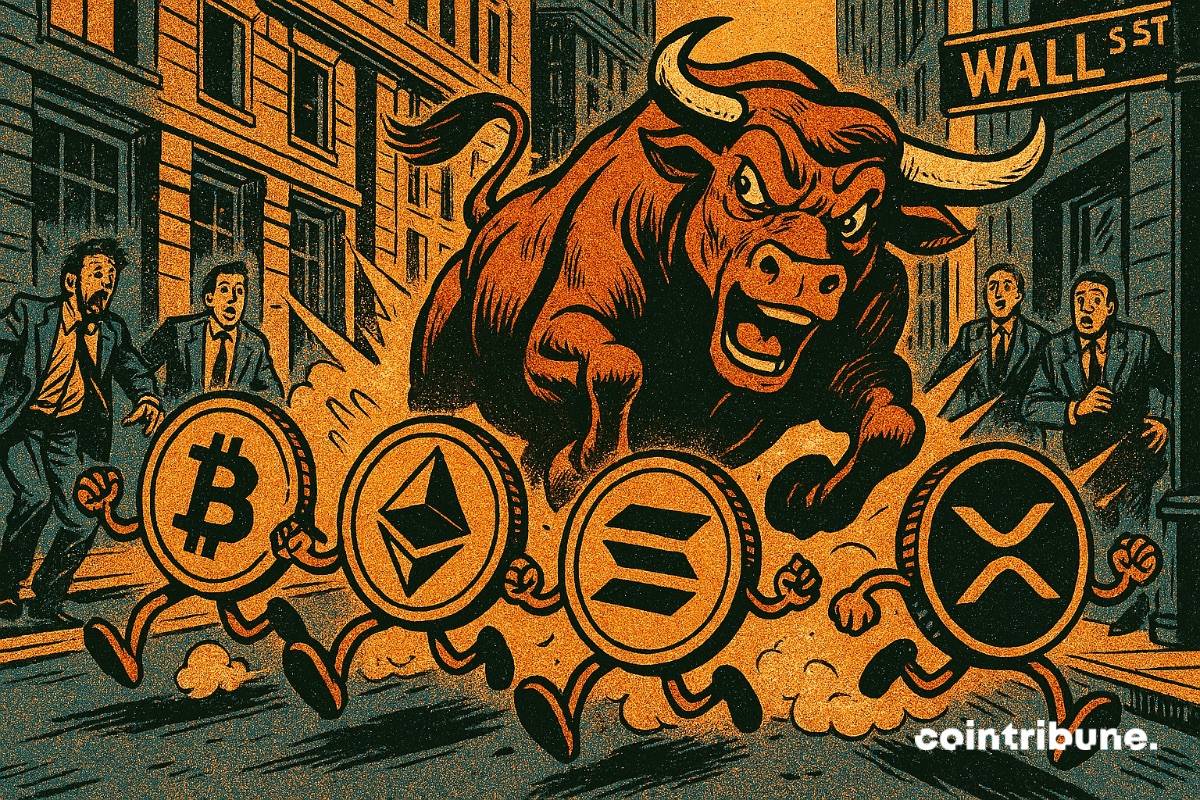
The week starts in the red—it's a bloodbath for crypto. Ethereum, Solana, and the market are plunging. Even Bitcoin isn't spared.
Cryptos are experiencing a new episode of brutal volatility, shaking a market already weakened by macroeconomic uncertainties. Solana is collapsing by 14%, XRP and Dogecoin are down more than 8%, while Bitcoin has dipped below $91,000. This movement, amplified by massive liquidations, raises questions about the resilience of these assets in the face of global economic pressures. Thus, the question now is whether this drop indicates a simple correction or the beginnings of a trend reversal.
Bitcoin is evolving in a context of uncertainty marked by economic fluctuations and contradictory signals in the financial markets. Amidst the resistance of safe-haven assets, low volatility, and macroeconomic expectations, investors are scrutinizing the upcoming market movements. Here are 5 elements that could be decisive for BTC this week.
European authorities are not very favorable towards bitcoin, to say the least, but the German election could change the game.
Strategy strengthens its position with 20,356 bitcoins purchased for $2.00 billion. Discover the details of this acquisition in this article!
In the whirlwind of Sino-American tensions, Bitcoin ETFs lost $1.14 billion in two weeks, victim of a geopolitical cataclysm, amid tariff threats and market uncertainty.
Bitcoin is evolving in an almost critical equilibrium zone. Usually subject to marked fluctuations, the asset has recorded historically low implied volatility in recent days, a situation that is as intriguing as it is worrying for analysts. As the markets await a strong signal, a well-known figure in the sector, Michael Saylor, suggests a new massive buying movement for his company Strategy. Is the Bitcoin market on the brink of an explosive move? As open interest in BTC futures declines and volatility reaches historical lows, some indicators suggest that a period of high activity could follow.
Amid revolutionary announcements, technological evolutions, and regulatory turbulence, the crypto ecosystem continues to prove that it is both a territory of limitless innovations and a battlefield of regulatory and economic conflicts. Here is a summary of the most significant news from the past week surrounding Bitcoin, Ethereum, Binance, Solana, and Ripple.
The giant Fidelity has published a very interesting report on the Lightning Network, a network that allows for instant and nearly free bitcoin transactions.
The collapse of Shibarium hits Shiba Inu like a thunderclap: 96% fewer transactions, a wreck for the meme crypto, taking with it the hopes of investors.
Michael Saylor, co-founder of Strategy (formerly MicroStrategy), hinted that his company is set to resume its massive Bitcoin purchases after a brief one-week pause. This announcement comes as Strategy continues its 21/21 plan, aimed at accumulating even more BTC.
In a crazy quest to save the American economy, VanEck sees bitcoin as a miracle cure. Could a strategic reserve of cryptocurrency really wipe out 21 trillion in debt by 2049?
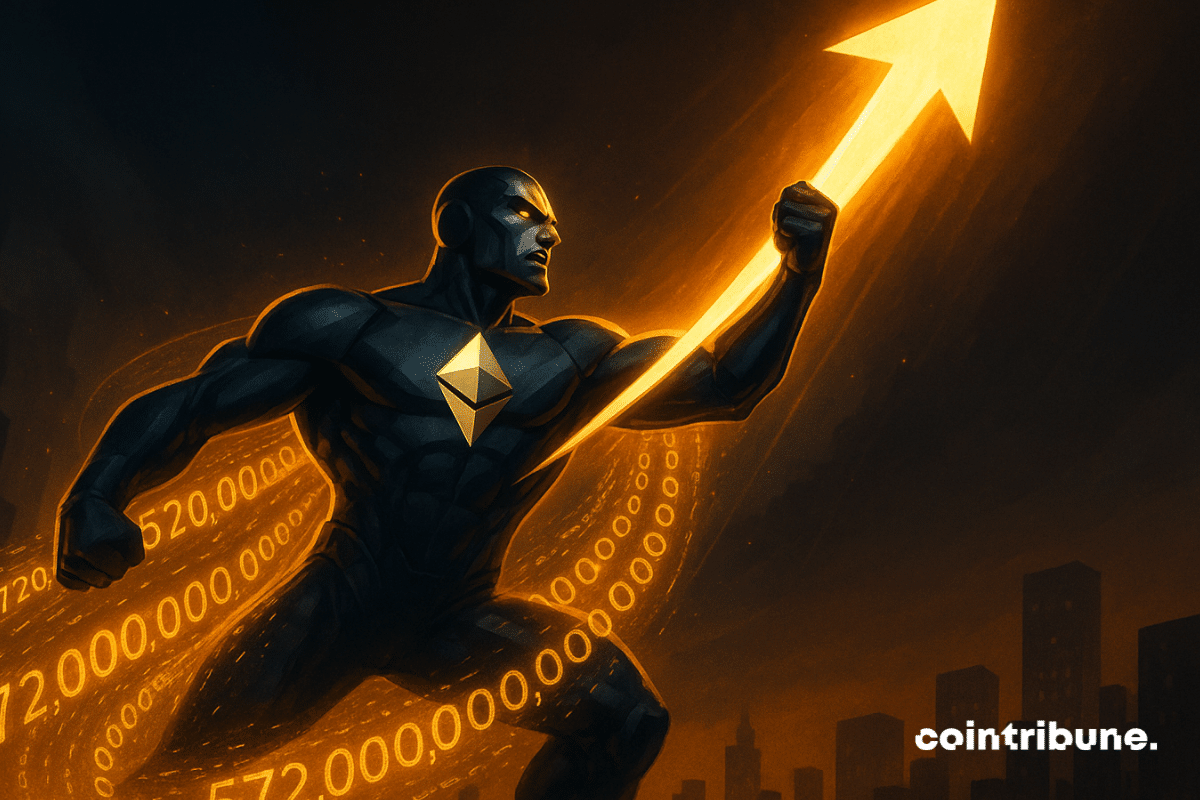
The rise of cryptocurrencies goes beyond speculation and investment. Indeed, the actual use of these assets as a means of payment has reached an unprecedented level, transforming the perception of the sector. Binance Pay, the payment tool of the giant Binance, has just recorded $72.4 billion in transactions in 2024, a figure that reflects increasing adoption. This surge can be attributed in particular to the important role of stablecoins and a diversification of uses, in a context where traditional players struggle to keep pace. While crypto payments were still marginal a few years ago, Binance Pay is now establishing itself as a key player in this revolution.
The crypto market is often unpredictable, but this time, some investors are looking not at technical charts, but at the sky. Indeed, on February 28, a rare alignment of seven planets (Mars, Jupiter, Saturn, Venus, Uranus, Mercury, and Neptune) is drawing the attention of astrologers and the crypto community. According to several experts in financial astrology, this cosmic configuration could signify strong turbulence for Bitcoin and the entire market. Between skepticism and mystical beliefs, the idea that the stars could dictate price movements is divisive, but one thing is certain: the climate of uncertainty is settling in.
Financial markets are full of analogies and historical models that analysts scrutinize closely to anticipate trends. In the crypto universe, the history of Bitcoin often serves as a compass for understanding the evolution of other major assets. Today, Ethereum seems to be following in the footsteps of BTC, replicating the patterns of its third cycle. This parallel fuels speculation: if history repeats itself, ETH could soon cross a decisive threshold.
The crypto industry has just experienced a strategic twist. Franklin Templeton, a giant in asset management, is launching its Bitcoin & Ether ETF (EZPZ), a bold move that redefines access to cryptocurrencies. Far from being a mere financial product, this ETF embodies a subtle break between the era of individual speculation and that of structured institutional adoption.
BlackRock's Bitcoin ETF now dominates the market with over 50% of assets under management, solidifying its leadership position among ETF issuers in the United States. This dynamic comes as Bitcoin ETFs experience three consecutive days of withdrawals, testing the resilience of BTC.
Financial markets do not only react to numbers but also to the feelings and expectations of investors. In the crypto universe, where volatility is the norm, every signal emitted by a major institution can influence trends. This time, it is JPMorgan that makes a splash: the American bank believes that the Bitcoin and Ethereum markets are facing an increased bearish risk due to a disengagement of institutional investors. Such an analysis is based on the evolution of CME futures contracts, which show signs of critical weakness.
The American economy is facing a dynamic that could disrupt the existing balances: demand for long-term Treasury bonds is weakening, calling into question the strength of the dollar and fueling new economic uncertainties. As the Federal Reserve remains committed to a delicate monetary policy and inflation struggles to slow down, Bitcoin finds itself at a strategic crossroads. Historically viewed as a speculative asset, it is now seeing its status evolve as some U.S. states consider incorporating it into their reserves. The central question is thus: will Bitcoin suffer the effects of this uncertainty or will it seize the opportunity to assert itself as an alternative safe haven?
Bitcoin continues its spectacular rise in early 2025, reaching $98,404 on major exchange platforms. This increase comes against a backdrop of growing institutional adoption and promising technical signals, as traditional markets like gold and the S&P 500 also set new records.
Michael Saylor proposes a bold vision: the United States should acquire 20% of the circulating bitcoins. In a speech at CPAC, he stated that such a strategy could not only strengthen the dollar but also help pay off the national debt. Behind this financial ambition lies a geopolitical struggle where every major power seeks to assert itself in the digital economy of tomorrow.
The SEC, once a bastion of conservatism, is finally awakening to the enchanting song of cryptocurrencies. ETFs are making a grand entrance, and the agency, once inflexible, seems to be discovering the virtues of compromise.
Under the guidance of Anonymous, the magnate Musk is exposed: crypto manipulations, power excesses, and sacrificed workers, the Tesla empire wobbles in the face of digital anger.
The volatility of the crypto market is nothing unusual, but the recent bearish trends have caught the attention of analysts. Nearly a quarter of the 200 largest cryptocurrencies have hit their lowest level in a year, a phenomenon that, according to some experts, could signify an imminent market capitulation. This situation, characterized by cascading liquidations and panic movements, raises questions about the direction the market will take in the coming weeks.