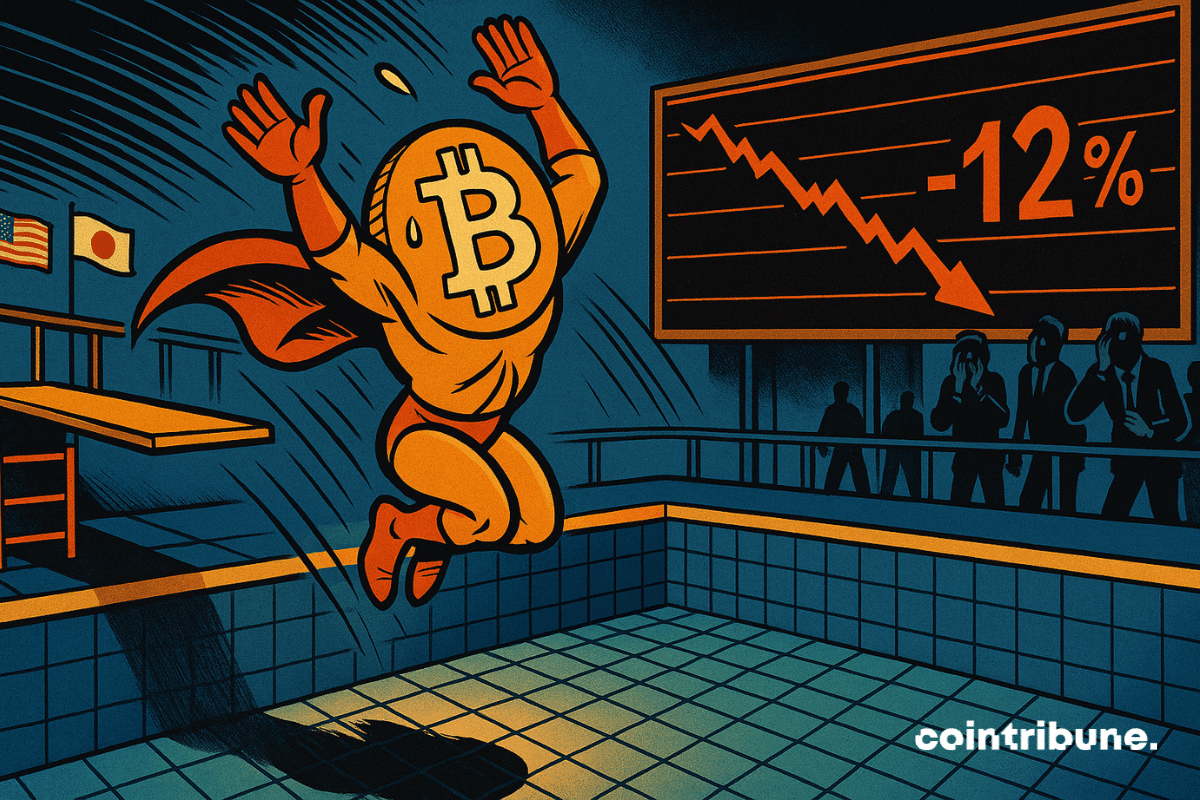
In the grand theater of power, Trump outlines a bold move: perhaps a crypto-friendly sovereign fund. Between a bluff and strategic genius, the suspense remains intact.
The price of bitcoin has fallen below the $100,000 mark following China's announcement of new tariffs on American imports. This decision, which comes amid increasing trade tensions between the two powers, has caused a shockwave in the markets. Analysts fear a period of heightened volatility if Sino-American negotiations do not progress.
MicroStrategy, known for its massive commitment to bitcoin, surprised the markets by temporarily halting its BTC purchases. According to an announcement from Michael Saylor on February 3, 2025, the company has not acquired any bitcoin for a week already. This pause raises questions... strategy or is BTC just not interesting at the moment?
The crypto market is going through a period of instability, and Solana (SOL) is on the front lines. Since February 1st, the drop of Bitcoin below $100,000 has caused a shockwave across altcoins. Solana, whose price moves in strong correlation with BTC, has seen its price fall below the critical threshold of $200. The impact has not been limited to price declines: investors have massively reduced their exposure, leading to a withdrawal of $367 million from spot markets in three days. This massive liquidation has reversed market sentiment, as evidenced by a long/short ratio dropping to 0.93, confirming seller dominance. While technical indicators signal sustained bearish pressure, a break of current support levels could send Solana to new lows, unless a sudden surge in demand comes to reverse the trend.
On February 3, 2025, Bitcoin reached a local low of $91,530 before rebounding to $95,306 later in the day. This decline comes after China, Canada, and Mexico promised severe retaliatory measures in response to tariffs imposed by the Trump administration. These measures have rekindled fears of a global trade war, prompting investors to shy away from risky assets, including cryptocurrencies.
The Crypto Fear and Greed Index has just reached 39, signaling a significant period of uncertainty in the markets. This indicator, ranging from 0 (extreme fear) to 100 (extreme greed), is an essential barometer of market sentiment. A value of 39 suggests some anxiety, but is it a sign of imminent panic or a strategic investment opportunity?
Amid revolutionary announcements, technological developments, and regulatory turbulence, the crypto ecosystem continues to prove that it is both a territory of limitless innovations and a battleground of regulatory and economic struggles. Here is a summary of the most significant news from the past week surrounding Bitcoin, Ethereum, Binance, Solana, and Ripple.
Bitcoin asserts its dominant position against altcoins. The queen of cryptos sees its market share cross the symbolic threshold of 60% on February 2, while altcoins suffer significant losses following the new trade measures imposed by President Trump.
Bitcoin, freshly crowned with a peak of $102K, stumbles and dangerously flirts with $95K. A slight shiver or the beginning of a major downfall? Cryptocurrency trembles, and so do investors.
Financial markets sometimes hold paradoxes. While Bitcoin is experiencing a new surge, surpassing the symbolic threshold of 100,000 dollars, one surprising element stands out: the absence of individual investors. After the Federal Open Market Committee (FOMC) meeting, the Bitcoin futures market witnessed a rapid rise, with an increase of 1.2 billion dollars in just 24 hours. However, instead of widespread enthusiasm, the data reveals a significant retreat of small investors, whose activity has dropped by 50% since November 2024. This phenomenon highlights a profound transformation in the market, where financial institutions are taking over from individuals. Should we see this as a mere cyclical adjustment or a lasting change in the evolution of Bitcoin?
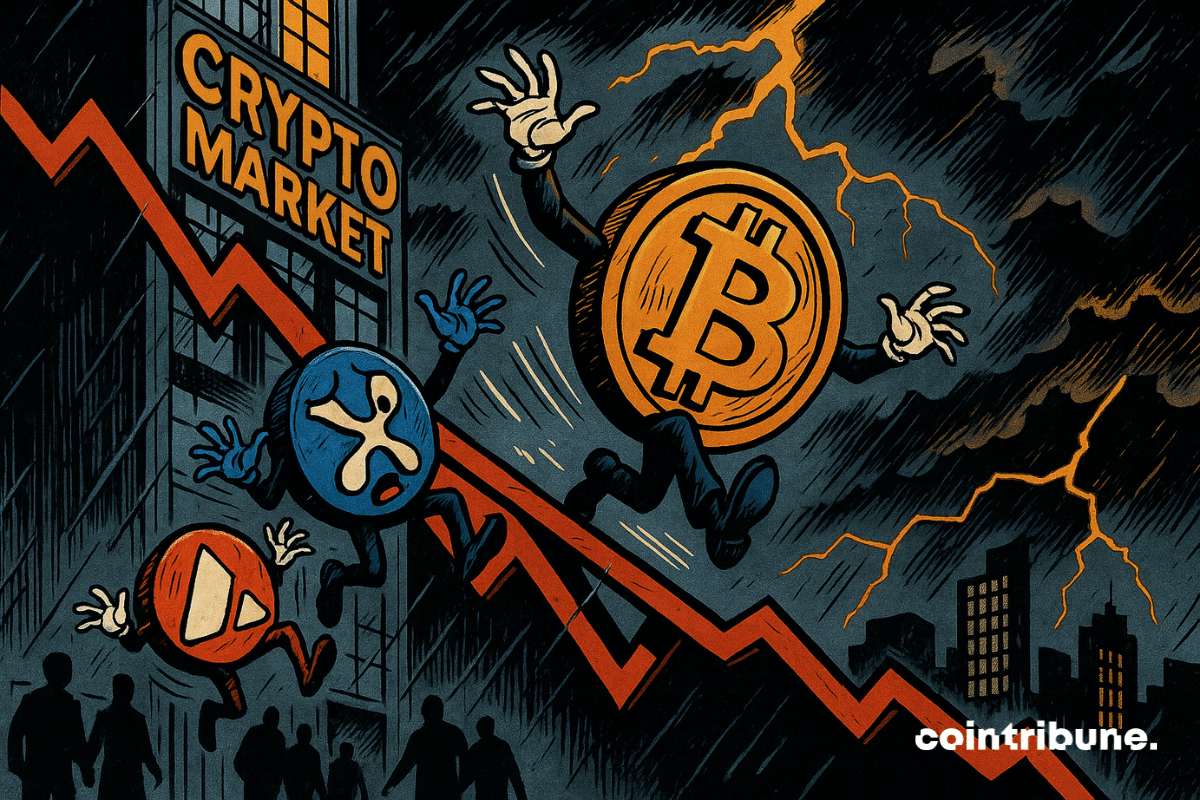
The crypto market is currently undergoing a decline, significantly impacting major assets such as Bitcoin, XRP, and Dogecoin. This downward trend has raised concerns among investors and traders, who are now adopting a more cautious approach in light of the increased market volatility. Here are the reasons behind this drop!
Court decisions regarding cryptocurrencies play a key role in the evolution of sector regulation. Indeed, when it comes to stolen funds, the issue becomes even more sensitive, as it pits the principle of confiscation against that of restitution to the victims. The case of the Bitfinex hack in 2016, one of the largest Bitcoin thefts in history, crystallizes these tensions. After the seizure of 94,643 BTC by US authorities, the courts are questioning the appropriateness of returning them to Bitfinex. Such a decision could create a major legal precedent, which would influence the future management of cryptocurrencies seized by the courts.
Bitcoin has experienced a significant drop, falling below the symbolic mark of 100,000 dollars for the first time since January 27. This decline comes amid heightened trade tensions, following Donald Trump's announcement of new tariffs targeting China, Canada, and Mexico, prompting immediate reactions from these countries.
The intense cold wave in the United States has caused the first negative adjustment in Bitcoin mining difficulty since September 2024, according to mining company Luxor. In January, a powerful explosion in the Arctic dropped temperatures in the USA, increasing the demand for electricity and driving up energy prices. This situation forced many BTC miners to slow down their operations, resulting in a decrease in mining difficulty.
January was a festival for XRP: 50% increase, regulatory green lights, and a crypto market in ecstasy. But at 4 dollars, does the party continue or will the wake-up call be brutal?
Small bitcoin investors are intensifying their sales on Binance at the beginning of 2025, with transfers reaching 6,000 BTC in January. This trend sharply contrasts with the behavior of large whales, who maintain a more conservative approach in their movements.
Gold, the euro, stocks... and Bitcoin in the Czech vault? Finance wavers between daring and caution, and Prague dances on a tightrope between volatility and ambition.
The integration of bitcoin into the reserves of central banks deeply divides economic actors. On one side, some governors advocate for a diversification of assets to adapt monetary strategies to a changing world. On the other, the European Central Bank (ECB) takes a firm stance and categorically rejects any legitimacy of bitcoin as a store of value. This debate has taken on a new dimension following Christine Lagarde's statements. When asked at a press conference, the ECB president abruptly dismissed speculation, asserting that bitcoin did not meet any of the required criteria to be included in the central banks' reserves: "liquid, safe, and secure." This stance contrasts with that of the governor of the Czech National Bank, Aleš Michl, who is open to the idea of exploring new asset classes. This growing divergence illustrates the rift between a conservative approach to the financial system and a more pragmatic vision, championed by some decision-makers who seek to anticipate upcoming monetary transformations.
The crypto market is undergoing a profound transformation, and Bitcoin is more than ever the central element of the digital financial landscape. While previous cycles saw altcoins capitalize on BTC's rise to gain ground, the current dynamics are taking an unprecedented turn. Institutional investors are massively favoring Bitcoin, neglecting thousands of tokens that continue to proliferate. Its dominance index surged by 15.5% in January 2025, reaching nearly 59%, a level that illustrates a clear imbalance between BTC and the rest of the market. This rise to power is not solely due to the influx of capital. Political decisions, ETF performances, and the exhaustion of altcoins are contributing to reinforce the supremacy of the king of crypto. In light of these transformations, is Bitcoin on the verge of permanently detaching itself from the traditional crypto market?
The car manufacturer Tesla reported a substantial gain of 600 million dollars on its bitcoin investments in the fourth quarter of 2024, benefiting from new accounting regulations. This remarkable performance, announced during the quarterly earnings release on January 29, represents more than a quarter of the company's total profit for this period.
Once silent, crypto wallets are stirring: 36 million digital souls are exploring the blockchain, shaking up banks and traditions. The monetary revolution, like a rising tide, seems inexorable.
The Salvadoran government has urgently passed a major amendment to its bitcoin legislation, abandoning the requirement for companies to accept BTC as a means of payment. This reform comes as part of a $1.4 billion loan agreement with the International Monetary Fund (IMF).
Bitcoin, despite its 10% increase since January, could face a major correction as gold outperforms with annual gains of 20%. This inverse dynamic between the two assets raises concerns about an imminent reversal in the crypto market.
The Lone Star State could become the first American state to officially establish a bitcoin reserve. Dan Patrick, the Lieutenant Governor of Texas, has included this project among the legislative priorities for 2025, marking a decisive milestone in the institutional adoption of cryptocurrencies in the United States.
Every decision made by the American Federal Reserve shapes the global economy and influences the cost of credit, the direction of investments, and the stability of financial markets. At its first meeting of 2025, the Federal Open Market Committee (FOMC) chose to keep interest rates unchanged, despite Donald Trump's persistent calls for monetary easing. This status quo caused a contrasting shock wave: stock indices, from Nasdaq to Dow Jones, closed lower, while Bitcoin surged by 2.5%. Thus, this movement underscores once again the unique trajectory of cryptocurrencies, which seem to diverge from traditional economic logics.
Monetary tensions are intensifying as the BRICS accelerate their quest for independence from the US dollar. This dynamic is upending global economic strategies and prompting major powers to rethink their financial reserves. Currently, the Trump administration has announced the creation of a "strategic crypto stock," reigniting an explosive debate between bitcoin supporters and those of XRP. Some see it as an official recognition of the role of these assets in monetary policy, while others question which cryptos will actually be integrated. Beyond technological rivalry, this confrontation reveals major geopolitical stakes: the choice of the BRICS between bitcoin, XRP, or another crypto could reshape the balance of global reserves and redefine power dynamics among states.
After Texas, Russia is also turning to the Bitcoin industry to balance its electrical grid and reduce costs. When will France wake up? And Germany?
The governor of the Czech National Bank, Aleš Michl, recently proposed an ambitious plan to invest up to 7 billion dollars in Bitcoin (BTC) as part of the bank's reserve diversification strategy. This proposal, which will be presented to the bank's board of directors on January 30, 2025, could make the Czech National Bank the first European central bank to invest in Bitcoin.
Nvidia stumbles, Bitcoin shudders. When 600 billion goes up in smoke, the flagship crypto feels the change in the wind. And if the golden future of BTC were to emerge from the ashes of tech?
The Arizona Senate takes a historic step towards institutional adoption of cryptocurrencies with the advancement of a bill allowing the state to invest up to 10% of its public funds in bitcoin. This initiative could trigger a wave of similar adoption in other U.S. states.