Mon 16 Feb 2026 ▪
4 min read
▪
by
U.S. equities are seeing rising risk appetite, while Bitcoin lags with muted institutional demand and slow accumulation.
U.S. equities are seeing rising risk appetite, while Bitcoin lags with muted institutional demand and slow accumulation.

Crypto markets are going through a turbulence zone. For the fourth consecutive week, specialized funds record massive withdrawals. Bitcoin stumbles and falls below the symbolic 70,000 dollars mark.

Amid a correction of bitcoin and in a climate of increased volatility, Michael Saylor, the leader of Strategy, sends a new buying signal. This decision intrigues as much as it divides, while the asset evolves under pressure. Behind this announcement, it is the whole coherence and risks of an assumed accumulation strategy that are once again spotlighted.

Bitcoin is going through a moment of truth. As American inflation slows significantly, the main argument supporting its legitimacy, that of a hedge against monetary erosion, falters. The latest consumer price figures reshuffle the cards and force investors to reconsider their exposure to BTC. Between macroeconomic improvement, persistent volatility, and strategic questions, bitcoin's value proposition enters a phase of redefinition.

The debate is growing on social media and in crypto circles: what if autonomous artificial intelligences discovered the interest of bitcoin by themselves? This hypothesis, long relegated to the realm of science fiction, is gaining ground among experts. An unprecedented race could begin between humans and machines to control a resource that has become strategic.

Bitcoin struggles to stay above $70K as ETFs face significant outflows, reflecting cautious investor sentiment and ongoing market volatility.

The lady who manages billions says: AI will break everything, prices will collapse. Central bankers are in the dark. Her solution? Bitcoin, obviously.

A key valuation indicator today places bitcoin at an unprecedented level since March 2023, a period when BTC traded around 20,000 dollars. After several months of correction following its last all-time high, the market shows a reading rarely seen during the cycle. This configuration, based on on-chain data, raises questions about the real state of the market and the position of bitcoin in its current phase.

For years, Bitcoin has been sold as an escape route. A rare asset, outside central banks, supposed to shine when the rest trembles. Except that in 2026, the soundtrack changes: at the slightest twitch in tech, Bitcoin coughs too. And that is more than a market detail. It is an open identity crisis.

Donald Trump's empire continues to expand its footprint in the crypto universe. Trump Media has just filed two new exchange-traded funds focused on major cryptocurrencies with the SEC: a Bitcoin-Ether ETF and a Cronos ETF. This offensive comes as the market goes through a period of marked turbulence.

Bitcoin drops 28% in one month, short positions explode, and investors doubt. Yet, Anthony Pompliano remains convinced: this phase is only a prelude to a historic rise. Why does he see a unique opportunity in this volatility?

Friday the 13th, lucky day? Bitcoin flirts with its record driven by inflation. The Fed does not move. Truflation already knew. Atmosphere.

In Washington, the regulatory future of cryptos may be decided in the coming months. Amid market volatility, the CLARITY Act stands as a pivotal text for the American crypto industry. Treasury Secretary Scott Bessent advocates for its rapid adoption, believing that legislative clarification could soothe investor sentiment. Behind this tight schedule lies a major political stake: securing the crypto framework before the 2026 electoral balances reshuffle the cards.

Within a few sessions, bitcoin has plunged back into a turbulence zone rarely seen since previous major crashes. On-chain data reveals $2.3 billion in realized losses over seven days, a shock that ranks this episode among the most violent in its recent history. This wave of capitulation follows a brutal correction of BTC, falling heavily after its peak above $126,000.

Bitcoin nears $66,500, and short positions reach unprecedented highs since 2024. Could this extreme pessimism, often a sign of a reversal, trigger a rapid rebound?

A massive expiration shakes the crypto markets this Friday. Nearly 3 billion dollars worth of Bitcoin and Ethereum options mature on Deribit at 8:00 UTC. Traders remain cautious after last week's liquidation shock.

Bitcoin has just erased its hard-earned gains after last week's crash. The world’s leading cryptocurrency falls back towards $65,000, a collateral victim of a panic that hits the tech sector hard. Even precious metals are not spared.

Bitcoin and the broader crypto market posted modest gains over the past 24 hours, even as fresh U.S. labor data complicated expectations for near-term rate cuts. January’s jobs report showed that hiring remained firm, but growth across several sectors appeared restrained. Markets had hoped for weaker data to strengthen the case for monetary easing. Instead, traders were left facing mixed signals.
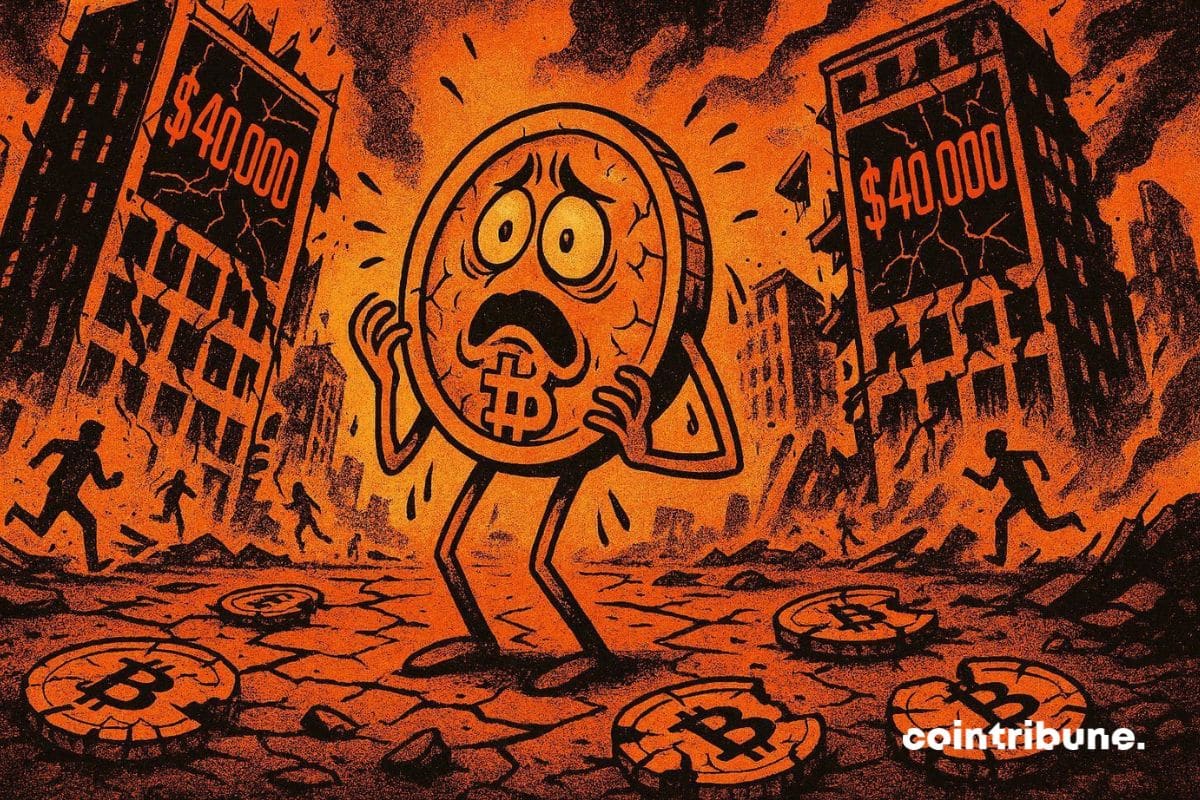
Did bitcoin really hit the bottom at $60,000? Michael Terpin, CEO of Transform Ventures, warns of a new drop to $40,000 before a sustainable recovery. Between historical cycles and market fragility, his analysis divides experts.

The crypto market sends contradictory signals. Indeed, investor sentiment has just reached a historic low, reflecting a strong distrust towards bitcoin. At the same time, some data from Binance indicate a slowdown in selling pressure. This discrepancy between market psychology and real flows raises a central question: are we witnessing a simple technical lull or the beginnings of a lasting rebalancing?

Bitcoin is going through a critical phase, but CryptoQuant encourages investors to stay calm. We tell you more in this article.

Crypto ETFs were supposed to mark the definitive entry of institutional investors into the ecosystem. A few months later, the reality is more mixed. While the market tries to identify a bottom, a clear gap is widening between bitcoin and Ethereum. The latest figures show that ETH ETF holders find themselves in a significantly more exposed position than their counterparts invested in Bitcoin ETFs. An imbalance that raises questions about the relative strength of the two assets during this correction phase.

Despite recent volatility and bitcoin falling below its production cost, the American investment bank maintains an optimistic outlook for crypto assets. Institutional flows are expected, according to it, to revive the market this year, provided the regulatory framework clears up. Will these expected flows be enough to reverse the trend?

While the crypto market wavers and investors hold their breath, every statement from a sector leader becomes a decisive signal. Michael Saylor, co-founder and executive chairman of Strategy, reappears at the center of the game at a critical moment. As rumors of bitcoin sales spread, he answers frankly. Between prolonged price drops, loss-making results, and stock market tension, his statement sounds like an act of faith, or a risky bet, to defend a strategy that has become emblematic.

While bitcoin evolves in a persistent volatility climate, ETFs backed by the leading crypto have just sent an unexpected signal to the market. After several weeks dominated by capital outflows, these investment products record a marked return of inflows. This movement, closely observed by institutional investors, comes at a pivotal moment where confidence remains fragile and every flow variation can reshape crypto market expectations.

The crypto market is entering a new phase according to Mike Novogratz. End of explosive gains? Analysis of a major turning point in this article!

Bitcoin hit $60,000 last week amid widespread panic. According to research firm K33, this plunge is not just another correction but indeed the end of capitulation. So, is the worst really behind us?

Crypto market on alert: Phantom faces controversy after a $264,000 theft. We give you all the details in this article.

The fragile calm of the crypto market has shattered. In a few sessions, bitcoin fell sharply to nearly $60,000, reviving doubts about the strength of the bullish cycle. This 32% correction since the halving prompts questions: simple turbulence or market pivot point? A study by Kaiko Research puts forward a strong hypothesis: bitcoin may have reached the midpoint of the bear market.

Bitcoin leaves its digital gold costume, shaken by AI and regulations, to transform into a risky asset. Grayscale sounds the alarm: the party is over for calm investors.