After weeks of volatility, Bitcoin is showing signs of settling, with analysts noting cautious optimism and the possibility of a year-end rally.
During Binance Blockchain Week, Peter Schiff was invited by Changpeng Zhao to authenticate a gold bar live. Unable to confirm its authenticity, the economist simply replied: "I don't know." A brief but revealing scene, which reignites the debate between physical gold and bitcoin, and raises questions about the verifiability of assets in a world increasingly oriented towards decentralization and blockchain transparency.
The European Union wants to entrust ESMA with a key role in crypto supervision. With MiCA, an ambitious reform is taking shape, balancing enhanced security and concerns about innovation. This extension of powers could change everything for investors and platforms. Essential details to know.
The sharp rejection of the $93,500 threshold this Thursday cooled the enthusiasm of a market seeking bullish confirmation. This level was expected as a symbolic pivot before a key Federal Reserve deadline. Far from a simple technical pullback, this retreat triggers doubts about BTC's ability to start a sustainable rally, in a climate where every economic figure weighs on monetary expectations.
While Bitcoin is leading a new rally, Solana sends a much more puzzling signal: capital is exiting ETFs but continues to flow on the blockchain. On one side, 21Shares sees its TSOL crypto ETF lose $42M. On the other, over $321M redeploy directly on-chain on Solana. An apparent contradiction that says a lot about the real state of the market.
As speculative frenzy once again takes hold of the cryptocurrency market, the SEC decides to put a firm brake on excesses. By targeting the most aggressive leveraged crypto ETFs, the regulator sends a clear signal: the era of "x5" products sold to the general public without genuine safeguards is reaching its limits. Between the desire to regulate innovation and the necessity to protect investors, a new red line is being drawn in the crypto ecosystem.
Crypto mergers and acquisitions reached $8.6 billion in 2025, with Coinbase, Ripple, and Kraken among the major firms expanding their operations.
Former SEC Chair Gary Gensler rehashed debate over digital assets in a Bloomberg interview, saying Bitcoin stands apart from the rest of the crypto market. He warned that most tokens still act as speculative bets with little support behind their valuations, setting a cautious tone for investors.
Larry Fink, CEO of BlackRock, acknowledged a change of stance on bitcoin. Long critical of cryptos, he now says he has revised his strategy. At the DealBook Summit organized by the New York Times, he mentioned a notable evolution in his perception of the asset. A symbolic shift, which also reflects the gradual adjustment of the institutional view on cryptos.

Bitcoin is changing dimension. For the first time since its creation, it is establishing itself as a pillar of institutional allocation. According to a joint analysis by Glassnode and Fanara Digital, $732 billion of new capital has been injected since the 2022 low, an absolute record surpassing all previous cycles combined. This massive flow does not reflect mere temporary euphoria but signals a structural market shift. Bitcoin is no longer merely speculative; it becomes a strategic asset in institutional portfolios.
Strategy, the Bitcoin giant, has suddenly slowed its purchases: only 130 BTC in December 2025, compared to 134,000 in 2024. A worrying turnaround or a brilliant tactic? After a last massive purchase of 8,178 BTC in November, the market wonders: should we fear a collapse or prepare for a historic rebound?
As Bitcoin passes through a new turbulence zone, Michael Saylor finds himself at the heart of a decisive showdown with MSCI. Threat of exclusion from indices, pressure from institutional investors, and massive exposure to the king asset: his bet on Bitcoin is more tested than ever.
Driven by the inflow of institutional capital, the crypto market seemed to stabilize. However, a wave of liquidations on derivative products highlights its fragility. According to Glassnode, these liquidations have nearly tripled, a consequence of excessive leverage now under strain.
While many eyes remain fixed on Bitcoin and Ether, Solana is currently playing a much subtler game. The SOL crypto still holds above the 120 dollar area, but this level is not just a technical support: it is supported by a real shift in liquidity and on-chain supply. However, trader-side demand remains surprisingly timid. And as long as this gap persists, Solana's structural advantage is not fully reflected in the price.
Gold breaks records, global liquidity explodes, but bitcoin lags behind. This divergence raises questions: why does the flagship crypto asset, supposed to protect against monetary dilution, not react? A Bitwise report reveals an unprecedented valuation gap between BTC and money supply growth. Market error or major opportunity? The lines could move, and faster than we think.
The second largest American bank officially opens its doors to Bitcoin. Bank of America now recommends its wealthy clients allocate between 1% and 4% of their wealth in crypto. A strategic shift marking a decisive step in institutional adoption.
Could bitcoin's four-year cycle be living its last moments? This is the unexpected hypothesis put forward by Grayscale in a report published on Monday. According to the asset manager, the crypto king could break free from its historical mechanics as early as 2026, reaching new heights well before the usual deadline. This major challenge to a pillar of crypto analysis sparks as much hope as questions in a rapidly changing market.
Vanguard, asset management giant, has just shaken up the market by opening its doors to crypto ETFs for its 50 million clients. A decision that could cause Bitcoin to explode and redefine institutional investment. Why this turnaround, and what will be the consequences?
After a month of massive disengagement, crypto investment products record a spectacular comeback. In a single week, crypto ETPs attract 1.07 billion dollars, breaking a series of four consecutive weeks of outflows totaling 5.5 billion $. This renewed interest marks an unexpected turning point in a highly uncertain monetary context, where markets scrutinize Fed signals.
Bitcoin is collapsing, miners are coughing, and some flee to AI: when digital gold turns into an electric burden under maximum stress!
In the derivatives market, a milestone has just been reached. For the first time, Ether (ETH) futures contracts have generated more volume than those on bitcoin (BTC) on the Chicago Mercantile Exchange. This reversal occurs in a climate of high volatility, reflecting a marked repositioning of institutional players. Such an overtaking could then signal a deeper change in the balance between the two main assets.
Bitcoin has just crossed a critical threshold by falling below $84,000, plunging investors into uncertainty. This week promises to be decisive for the 2025 year-end closing: rebound or collapse? Analysis of key levels, macroeconomic risks, and opportunities to seize before year-end.
Strategy launches a giant dollar reserve to support its Bitcoin bet. Discover all the details in this article.
David Sacks, a key figure in crypto and Trump advisor, calls the New York Times accusations a pure "nothing burger." Between threats of lawsuits, sharp denials and political stakes, this clash reveals much more than a simple media dispute.
China has just made a big move: the central bank is further tightening its crackdown on crypto and stablecoins, calling them a major threat. Why this radical decision? What impacts for the global market and investors?
Bitcoin ends this year on a familiar note. Down more than 36% from its annual highs, the asset eerily replicates the movements of the 2022 bear market. This correlation alarms analysts as crypto ETFs register positive inflows again. Between the return of institutional capital and memories of a previous crash, the market oscillates between concern and hopes of a rebound.
Bitcoin stumbled into the new month after a sharp weekend drop erased days of calm trading and reignited market-wide fear. Prices plunged without warning on Sunday, triggering heavy liquidations and closing out the asset’s weakest November in years. Traders now question whether the fall signals deeper trouble or a reset that clears the way for a rebound.
Self-custody and financial privacy have returned to the forefront of the U.S. crypto conversation after SEC Commissioner Hester Peirce reaffirmed them as core individual rights. Her remarks come amid regulatory uncertainty, rising ETF adoption, and renewed debate over Bitcoin’s founding principles.
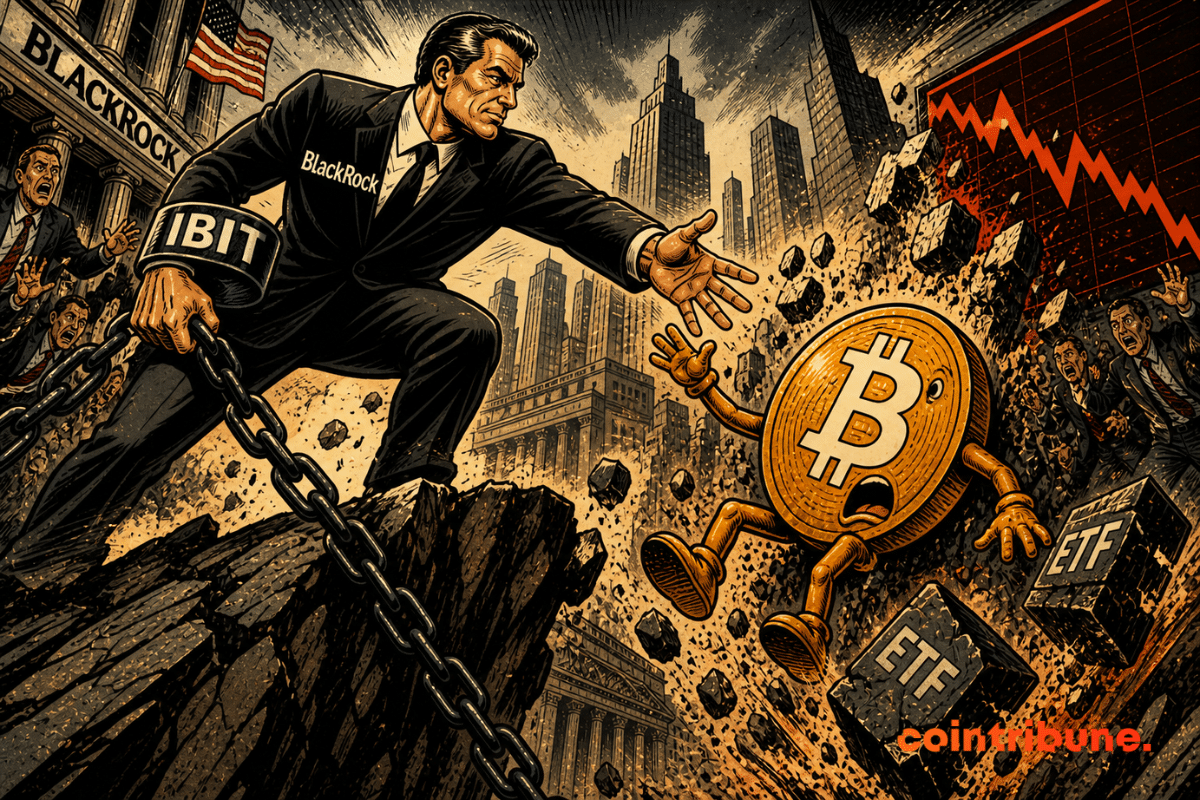
Heavy withdrawals hit BlackRock’s flagship Bitcoin ETF in November, but company executives say the activity reflects normal market behavior, not a shift in long-term sentiment. Momentum from earlier in the year continues to guide the firm’s outlook, supported by the strong demand that once pushed IBIT toward a major milestone.
Binance records a marked decrease in its Bitcoin and Ethereum reserves. At the same time, stablecoin deposits reach unprecedented levels. This surprising contrast draws the attention of analysts, who see a strong signal: the market is not disengaging, it is repositioning.