Crypto mining: American Bitcoin executes a 1-for-15 reverse split to increase its price and save its Nasdaq listing. Details and stakes.
The digital asset market is evolving in an environment marked by strong volatility. Several long-time investors are currently adjusting their positions as prices struggle to regain sustainable momentum. In this context, the recent moves of the Winklevoss twins have attracted observers' attention. Data published by Arkham Intelligence shows the transfer of significant amounts to the Gemini platform. This operation takes place while bitcoin remains under pressure and continues to search for a balance point in the market.
Visa, BlackRock, and 140 pals roll out with their own stablecoin. Circle takes a big hit on the stock market. Analysts say it's a storm in a teacup.
Crypto market cycles regularly impose an iron discipline on investors, turning the euphoria of peaks into long periods of uncertainty. The current environment of the digital financial industry is again suspended on the analyses of major Wall Street institutions, whose research notes guide capital flows worldwide. It is in this very volatile climate that the American investment bank Cantor Fitzgerald has just published a large-scale strategic report, stating that the bitcoin bear market is now about to end. This intervention comes at a pivotal moment when the price trend is seeking clear direction after months of continuous correction.
Just after the GENIUS Act was passed, two Republican senators proposed to shield American AI from foreign threats. There are significant geopolitical, economic, and moral implications to this initiative. A bold plan that poses a risk to the United States itself?
Bitget has launched TradFi 101, a long-term education program designed to help crypto users understand traditional finance. The initiative arrives as the exchange expands into stocks, commodities, ETFs, foreign exchange and tokenized assets. Its message is direct: access to more markets is not enough if traders do not understand how those markets work.
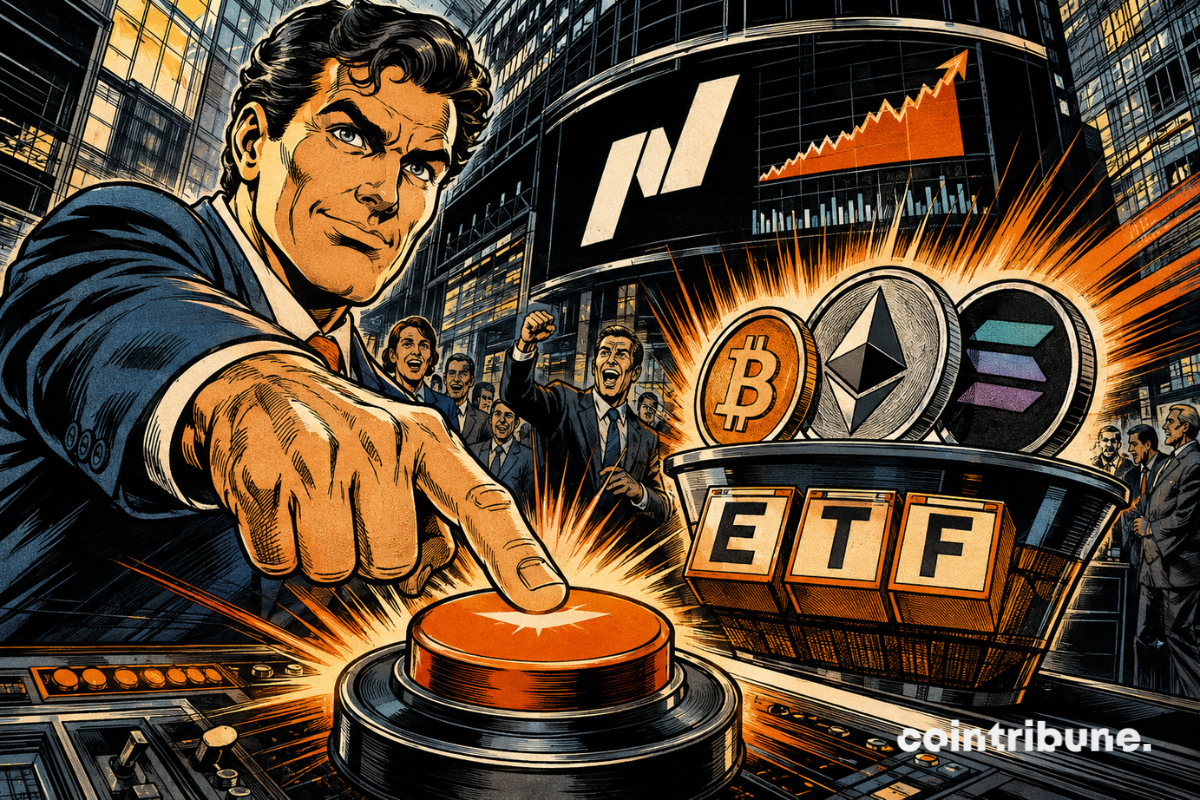
The SEC launched on July 1, 2026 a 60-day public consultation on its regulatory framework applicable to new ETFs, notably those exposed to crypto. The US ETF market jumped from 4,000 to 12,000 billion dollars between 2019 and 2025, largely driven by the automatic activation procedure that the SEC is now seeking to rethink.
The judicial and regulatory noose tightens further around the historic giants of the crypto ecosystem, reminding us that the past always catches up with the boldest players. As the industry strives to group under increasingly strict compliance banners, strategic decisions made at the heart of the previous bull bubble come back to haunt its flagship figures. This dynamic is perfectly illustrated by the litigation on British soil involving the world's leading exchange platform and its emblematic founder.
Anthropic unveils Claude Science, OpenAI responds with GeneBench-Pro: the AI rivalry extends to global scientific research.
The first half of the year ends with a resounding warning signal for the crypto ecosystem, illustrating the inherent fragility of highly volatile markets in the face of global macroeconomic dynamics. Traditional stock indices show insolent resilience while the crypto market undergoes a purge, challenging theories of stabilizing institutional adoption.
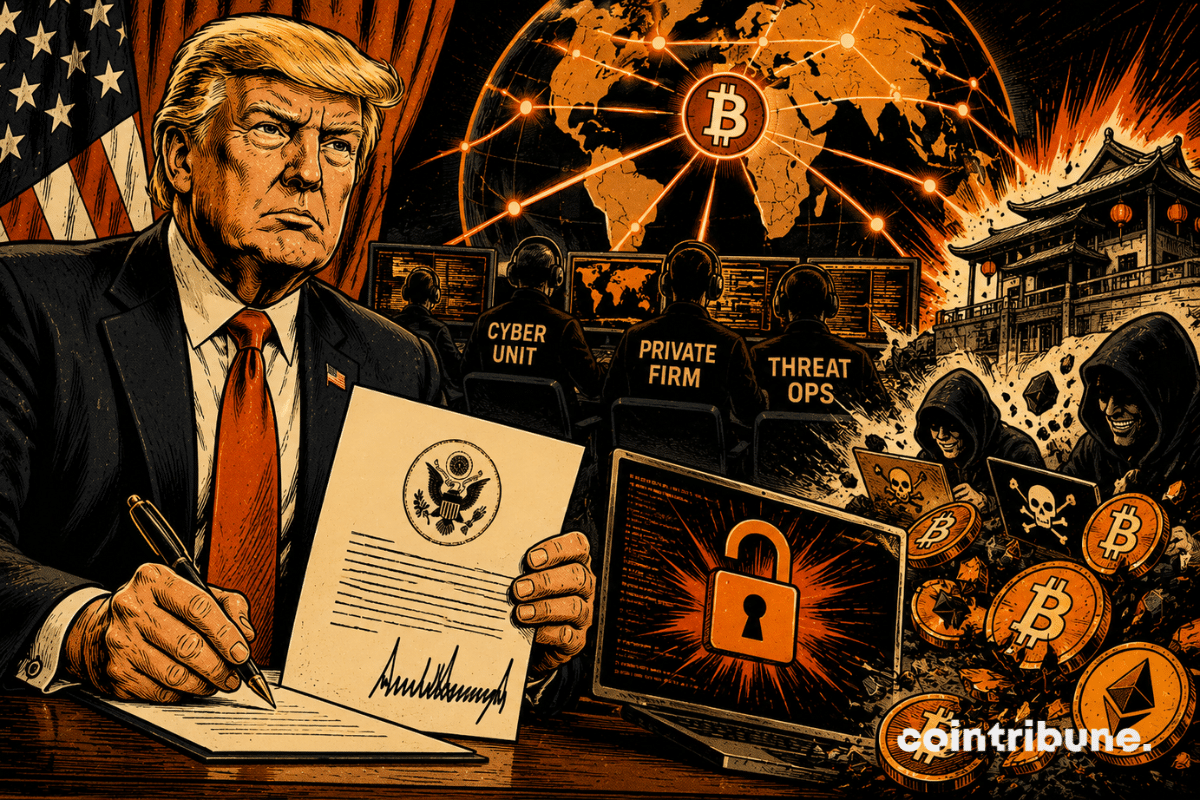
The digital asset market is attracting new attention following the publication of a US financial disclosure linked to Donald Trump's interests. The document reveals the scale of revenues from crypto, with a significant focus on cryptocurrencies, token sales, and blockchain-related projects. Among the declared assets are Bitcoin and Ethereum, two major sector references. This publication comes as the links between politics, regulation, and the crypto industry are gaining increasing importance in the United States.
UEX is connecting crypto futures with gold and other traditional markets through a single trading competition. Launched by Bitget, the UEX Futures League runs across two months, offers 240,000 USDT in online prizes and sends its strongest teams to an invitation-only live championship.
The institutional investment vehicle market has just received a major warning signal, demonstrating that a single arbitrage by a giant can disrupt the entire capital flow of an industry. While crypto-backed financial products seemed to stabilize approaching the half-year close, a wave of massive withdrawals shook the listed index funds, calling into question the short-term resilience of institutional demand.
The cryptocurrency sector is observing a new phase of activity around Solana, as its network records unprecedented levels of use. The blockchain attracts more users thanks to the growth of decentralized exchanges and the arrival of digital financial assets. This dynamic follows a sharp increase in the token, driven by significant volumes and visible growth of its ecosystem. Recent data shows a change in usage, with a strengthened position in decentralized financial infrastructure. This evolution draws the attention of global market players amid current transformation.
Only a few days left. On July 1st, 2026, the axe falls: any exchange serving European customers without a MiCA license must cease its activities within the Union. For millions of users, the question is no longer theoretical, it is very concrete.
Why does BitMine keep buying Ethereum while Strategy stops buying Bitcoin? Tom Lee demonstrates his unwavering confidence with an additional $43 million investment. An exciting and daring tactic.
Vitalik Buterin promises inviolable crypto votes thanks to obfuscation, a fascinating technical feat. But patience: the technology will take longer than the universe to run. We'll wait patiently.
Securitize is set to debut on the New York Stock Exchange on July 2, 2026 under the symbol SECZ. This listing places one of the main crypto tokenization infrastructures at the heart of Wall Street, following the approval of its merger with Cantor Equity Partners II.
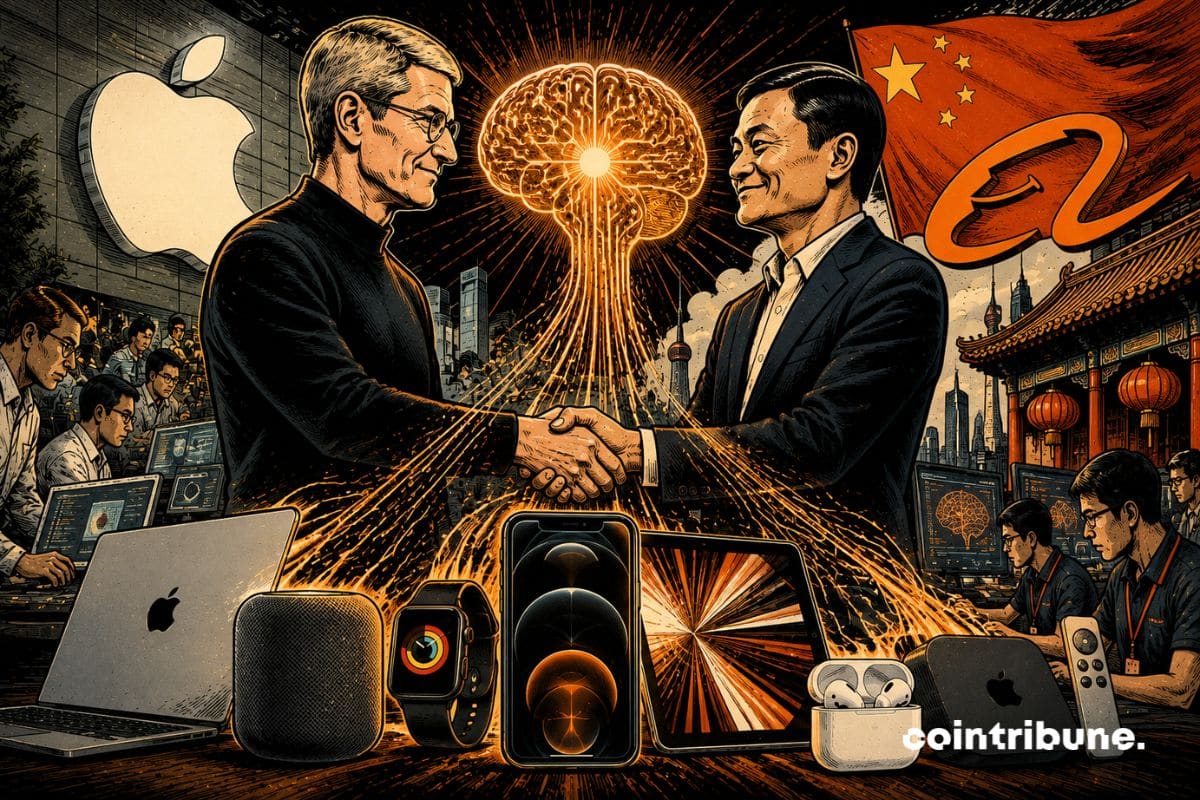
The militarization of cutting-edge language models is redefining the map of global technological power, turning computer code into a massive deterrent weapon. Artificial intelligence is now establishing itself as the heart of defense infrastructures. However, limited access to these technologies immediately causes deep geopolitical fractures. The recent restriction of foreign users by American industry leaders triggered an immediate industrial response in Asia. This regulatory decision, far from slowing the technological development of the countries concerned, served as a sovereign accelerator for Chinese laboratories.
Bolivia changes its monetary strategy after fifteen years of artificial stability. The country abandons its fixed peg to the dollar due to the decline of its reserves and economic pressure. This decision also revives the debate around financial alternatives like Bitcoin, as cryptocurrencies advance in economies facing currency tensions. The new exchange rate regime marks a new stage for the boliviano and transforms the country's monetary environment.
The analysis of weekly flows on spot crypto index funds reveals an unprecedented fracture within the sector, challenging the idea of a monolithic institutional block. This data is important because it shows that professional investors no longer blindly put their money into the two dominant assets, but are starting to choose growth alternatives.
BNB Chain surpasses Solana with $5.2B in tokenized stocks. A major turning point for tokenisation and real assets on blockchain.
Michael Saylor disrupts one of Strategy's founding principles with a new unprecedented financial framework. Between $2 billion share buybacks and possible Bitcoin monetization, this decision could transform the management of BTC cash reserves.
Shiba Inu (SHIB), the second largest memecoin in terms of market capitalization, is currently experiencing very strong turbulence that call into question its technical structure and shake traders during this first half of the year. While the asset has just recorded its worst monthly underperformance since January, this situation draws the industry's attention as it embodies an intense tug of war between an apparent graphical capitulation and discreet accumulation signals.
A question to start with. If tomorrow your crypto platform lost the right to operate in Europe, where would you go? It sounds theoretical. It is not. On July 1st, 2026, MiCA applies everywhere in the European Economic Area, and exchanges without approval will have to close their doors to EU customers. Kraken settled the issue long ago: license obtained in June 2025, from the Central Bank of Ireland. And to welcome all those who will have to move their cryptos in the coming weeks, the platform launches two offers. A contest with one million euros, and zero Futures fees on Kraken Pro for both new and existing Kraken users.
Polygon establishes itself in the race for stablecoin payments. The network processed about 79.25 billion dollars in May, across nearly 198 million transactions. An activity that allows it to overtake Solana and BNB Chain in the number of transfers.
Bitcoin is trading at 59,800 dollars this Monday, up 0.6% over 24 hours, but still below the psychological threshold of 60,000 dollars. The market structure remains bearish, despite a slight rebound in Solana and a lull in volatility indices. How long will sellers keep control?
The crypto market ends the second quarter of 2026 under extreme pressure. About 775 million dollars were stolen over 85 incidents, a record in terms of frequency. Two major attacks accounted for most of the losses, while DeFi saw its total value locked drop near 70 billion dollars.
Two days. That's how long it will take for Paris to become, at the beginning of July, the center of the AI world. Yann LeCun, Arthur Mensch, Mark Cuban, the head of robotics at Google DeepMind... all these people gathered just steps away from the Louvre Pyramid.
The historic gap between the gigantic volumes of traditional finance and the actual adoption of blockchain technologies is set to close thanks to digital settlement infrastructures. This transition is accelerating as financial institutions seek smoother architectures to modernize aging cross-border payment networks. It is in this context of systemic transformation that Brad Garlinghouse, CEO of Ripple, spoke in an interview with CNBC, revealing strategic figures and an unprecedented commercial ambition for the Ripple protocol and its native asset, XRP.